
When To Replace Outlets & Switches: Greenville Guide

If an outlet still powers your coffee maker or a switch still turns on the kitchen light, replacing it probably isn’t high on your list of home improvements. A plug that occasionally slips out or a switch that needs a second flip can seem like a minor inconvenience, especially when everything works again afterward. The problem is that restoring the connection temporarily does not explain why it became unreliable in the first place.
Electrical outlets and switches are among the most frequently used components of a property’s electrical system. An average home has approximately 75 outlets, yet most receive little attention until a device loses power. We connect appliances, chargers, entertainment systems, and office equipment every day, while switches open and close their contacts thousands of times over the years. Heat, moisture, vibration, heavy loads, and repeated use gradually affect the parts behind the wall.
That wear is not always visible. An outlet can continue supplying electricity while a loose connection heats the wiring behind it. A switch can still operate after its internal contacts begin deteriorating. What appears to be a small inconvenience may therefore be the first sign of a problem that becomes considerably more expensive if it is allowed to continue.
Redland Electric has spent years inspecting, repairing, and replacing outlets and switches throughout Greenville and Upstate South Carolina. We have seen how early attention can keep a straightforward replacement from becoming a repair involving damaged wiring, electrical boxes, or surrounding building materials. Recognizing the right warning signs can protect your property and potentially save thousands of dollars in repairs.
This guide explains how outlets and switches age, what changes you should watch for, and when a replacement should include an upgrade. It also covers GFCI and AFCI protection, smart controls, USB-C outlets, the additional concerns facing commercial properties, and what Greenville homeowners should understand before considering electrical work themselves.
Quick Checklist: Does Your Outlet or Switch Need Attention?
Below, we’ve put together a quick checklist of early warning signs that Greenville homeowners and businesses should watch for during ordinary use of electrical outlets and switches. It will help you spot the most common malfunctions, understand exactly what is happening, and know what to do next, feel free to save and reference this guide whenever you suspect an issue.
| What you notice | Why it matters | What to do |
|---|---|---|
| Plugs slide out or will not stay connected | Internal outlet contacts may have lost their grip | Stop using the affected receptacle and arrange replacement |
| Brown marks, blackening, or melted plastic | The device or its connections may be overheating | Keep it unused and request prompt electrical inspection |
| Buzzing, crackling, or a burning smell | A loose connection or arcing may be developing | Stop using the device and contact an electrician |
| An outlet or surrounding wall becomes unusually hot | Heat may be building inside the electrical box | Have the device and wiring inspected |
| A switch requires repeated flipping or wiggling | Its contacts, mechanism, or wiring may be failing | Arrange switch and circuit troubleshooting |
| A GFCI fails its test or will not reset | Protection may have failed, or another electrical fault may be present | Have the cause identified before returning it to use |
| Water has damaged an outlet, switch, or dimmer | Internal corrosion or contamination can remain after drying | Arrange replacement and evaluation of surrounding wiring |
| LED lights flicker after a bulb change | The bulbs and dimmer may be incompatible | Have the lighting and control checked together |
| Extension cords have become a permanent solution | Existing outlet locations may no longer support how the space is used | Discuss additional outlets and circuit capacity |
Why a Small Outlet or Switch Problem Can Become a Fire Hazard
It is easy to associate electrical fires with a large panel, a major appliance, or visibly damaged wiring. A small wall outlet does not seem capable of causing the same kind of damage. However, the danger comes from the connection carrying the electricity, not the size of the device around it.
Inside an outlet, metal contacts grip the plug’s blades and carry current to the connected equipment. A conventional switch opens and closes contacts to control the lighting. Both depend on secure connections. A loose wire, a worn contact, a plug that no longer sits firmly, or a connection affected by dust, oxidation, or corrosion can interfere with the path electricity is supposed to follow.
When current passes through increased resistance at a poor connection, heat develops in a concentrated area. Electricity can also arc across a gap between damaged or unreliable contacts. Over time, that heat can melt insulation, damage the outlet or switch, and ignite nearby combustible materials. The fire may begin inside the wall, well before someone notices anything unusual in the room.
According to National Fire Protection Association data, electrical outlets and receptacles are involved in more than 4,200 residential fires each year in the United States, while wall switches contribute to hundreds more. Many of these incidents involve loose connections, worn components, overheating, and other electrical failures that develop before the fire itself.
South Carolina building-code documentation also identifies loose connections in outlets, switches, and wiring devices as causes of dangerous arc faults. The concern is local as well as national. The South Carolina Department of Public Health recorded 10 electrical fires resulting in 12 deaths during 2024, accounting for approximately 18% of the state’s reported fire-related deaths that year.
Why hasn’t the circuit breaker tripped?
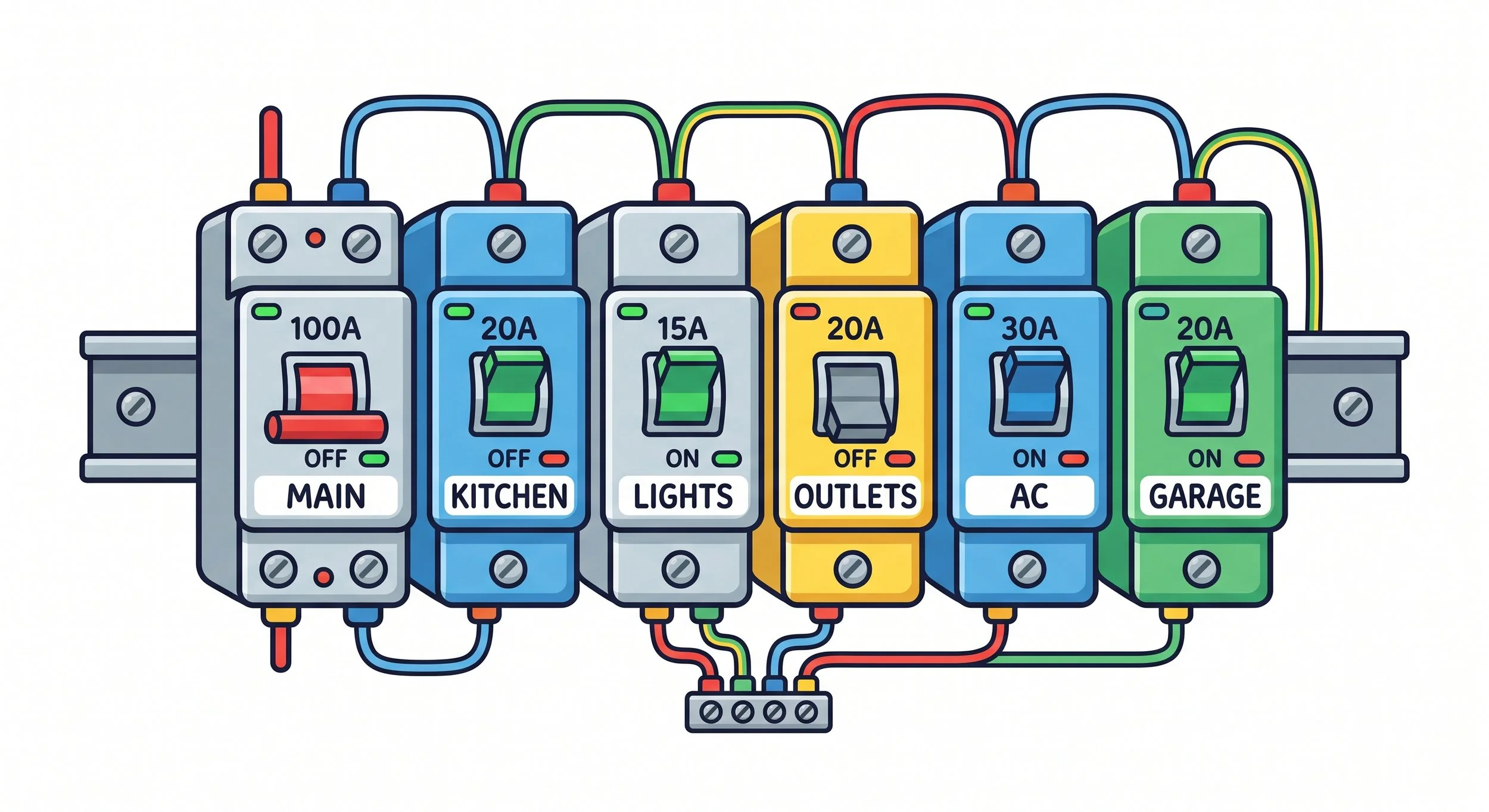
A property owner may reasonably assume that a dangerous electrical current would cause the breaker to shut off the circuit. Conventional breakers protect against excessive current, including overloads and short circuits, but they cannot always detect dangerous arcing or localized overheating inside an outlet or switch.
A poor connection can produce considerable heat while the circuit’s total current remains below the breaker’s trip threshold. The light stays on, the appliance continues running, and the homeowner receives no warning from the panel. That is why a breaker that has not tripped should not be treated as evidence that a discolored, buzzing, or unusually hot outlet is safe.
Overloading creates a related problem. Connecting too many demanding appliances to one circuit, particularly space heaters, window air conditioners, or workshop equipment, can push more current through the wiring than it was designed to carry. The resulting heat can affect wiring along the circuit, rather than only the outlet where equipment is plugged in.
Older wiring adds another concern. Insulation can become brittle and crack, exposing conductors inside a wall or electrical box. Backstabbed outlet connections, where wires are held by spring-loaded contacts instead of secured beneath screw terminals, are also more prone to loosening over time. A connection that gradually loosens through vibration and repeated temperature changes can become a source of arcing.
None of these problems requires a dramatic event to begin. A connection can heat and cool repeatedly for months before nearby insulation, wood framing, or dust ignites. Warmth, discoloration, buzzing, and loose-fitting plugs are valuable warnings precisely because they can appear before that damage becomes a fire.
How Long Do Outlets and Light Switches Actually Last?
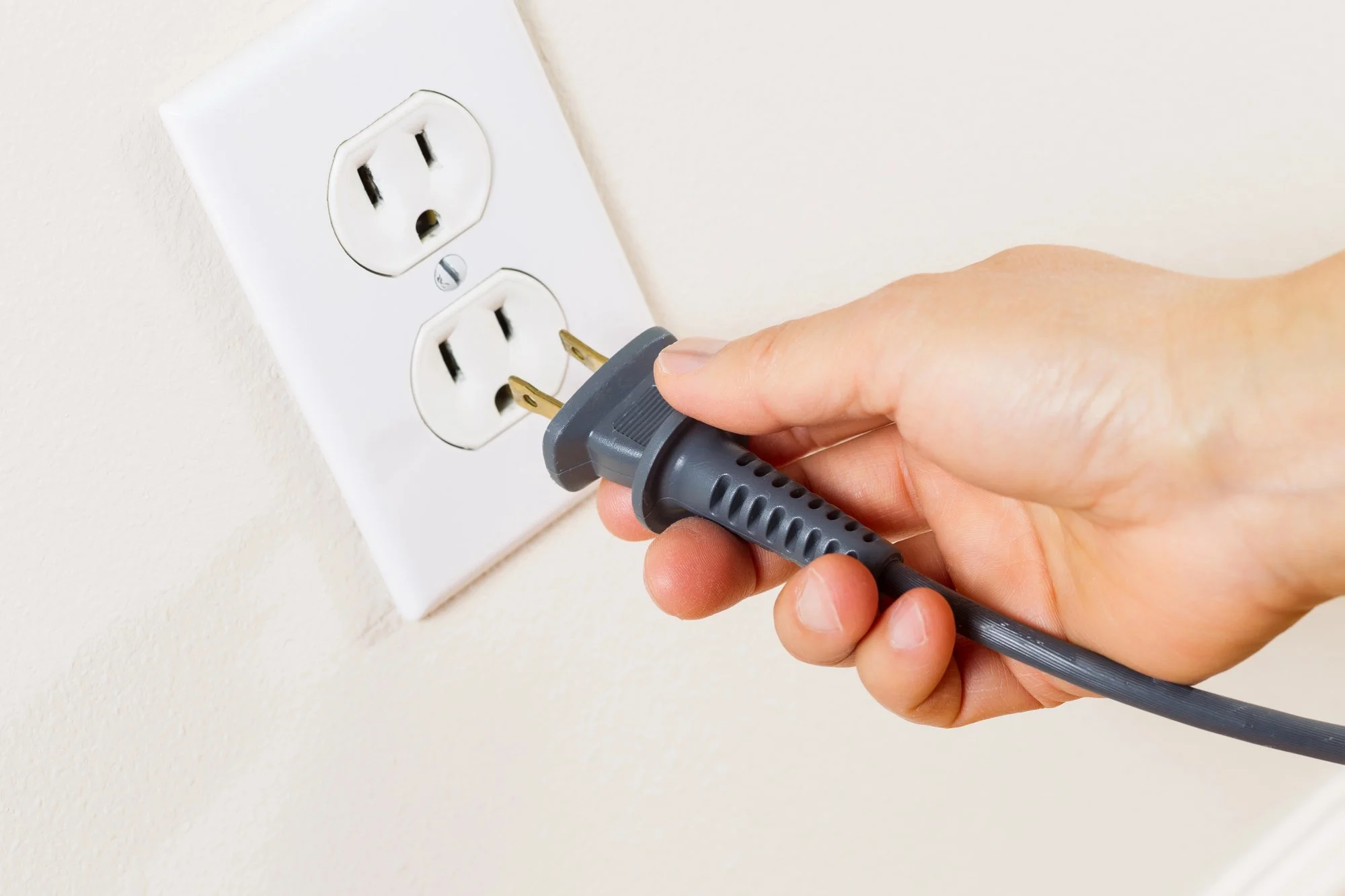
One of the first questions homeowners ask is how many years an outlet should last. It would be convenient to have a replacement schedule similar to changing a filter, but outlets and switches do not have one standardized expiration date.
Some sources give electrical outlets a lifespan of 15–25 years.Leviton’s outlet-safety guidance, however, focuses on symptoms such as loose plugs, overheating, discoloration, sparking, buzzing, burning odors, and physical damage. Those conditions tell you more about the need for replacement than the installation year alone. Outlets don’t have a set lifespan, instead, you should look for an actual warning signs that your outlet may require professional inspection.
This distinction matters because an outlet can develop a problem well before reaching a commonly quoted lifespan. Waiting another five years because an online guide says it should last 20 does not make a loose connection any safer.
What Thousands Of inspected Outlets have shown
We have inspected thousands of homes across Upstate South Carolina, and the condition of outlets varies considerably from one property to another. An outlet may require replacement after five years, while another continues operating for 15 years. How it was installed and what it has been exposed to make a substantial difference.
Among a group of 150 homes we inspected across Upstate South Carolina, 22 had outlets installed approximately 15 years earlier. All 22 had outlets with serious visible or internal safety concerns requiring replacement. We found aging plastic components, contact springs that had lost tension, and internal contacts that had become pitted.
Our experience is that regular use commonly creates safety concerns around 15 years, although problems can appear much sooner. Older outlets are more likely to develop loose plug connections, warm faceplates, buzzing, intermittent power, sparking, or discoloration. The useful question is therefore not simply how old an outlet is, but what condition it is in now.
For homeowners considering outlet replacement in Greenville, an inspection provides that answer. It can distinguish an aging device that needs replacement from a newer outlet whose failure was caused by damaged wiring or an unsuitable installation.
GFCI outlets also need attention as they age
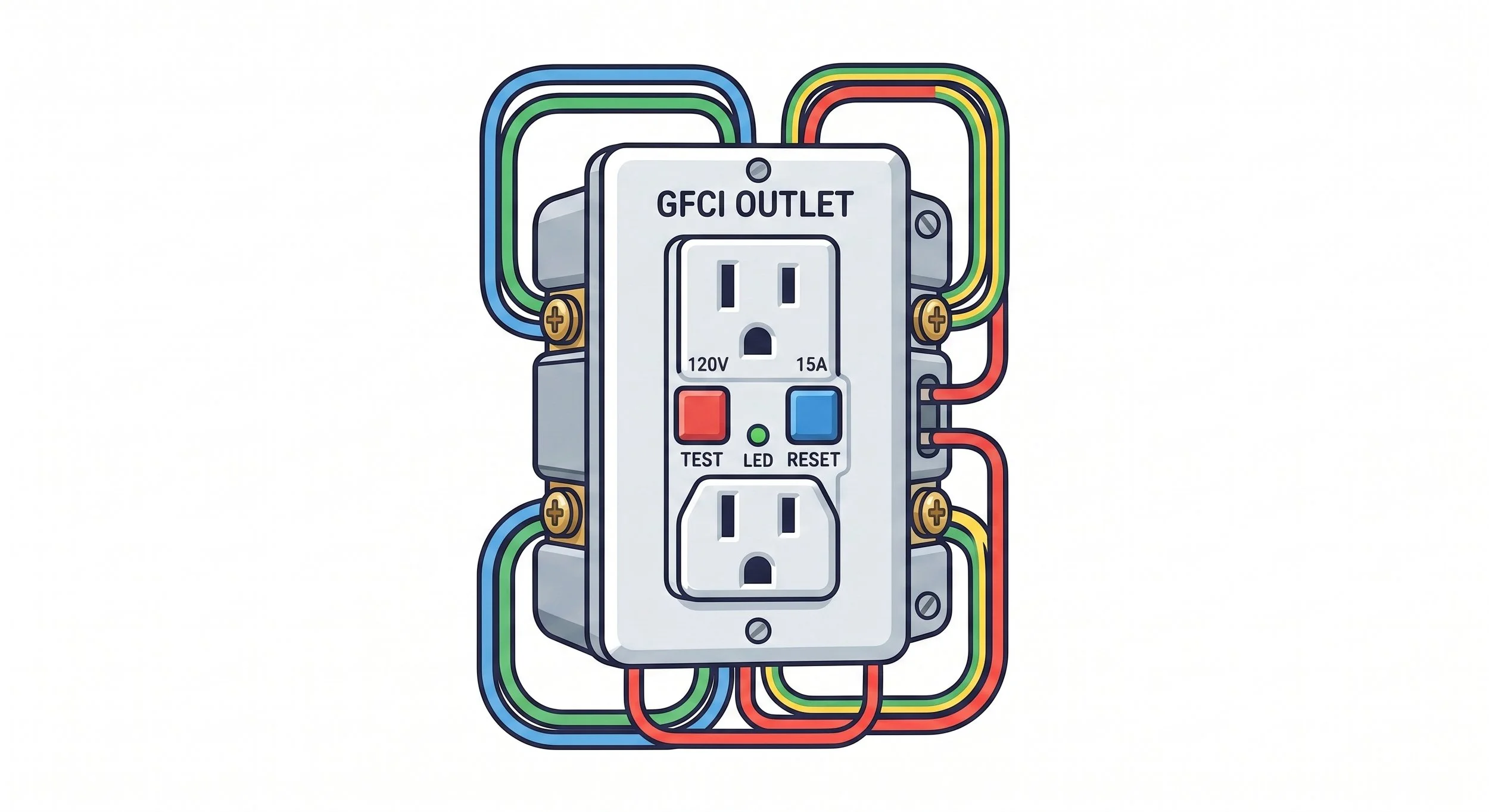
GFCI outlets fall within a similar range and typically begin showing wear or compromised operation around 15 years. They contain the receptacle contacts that hold a plug, but they also have a protective function that must continue working correctly.
An outlet supplying power does not establish that its GFCI protection is functioning. The built-in TEST and RESET procedure should be followed regularly, regardless of age. Monthly testing according to the manufacturer’s instructions helps identify protection that has failed before someone depends on it during a ground fault.
Ungrounded two-prong outlets are the exception to waiting for age-related symptoms. If a property still has them, they are already past their useful life and worth replacing regardless of age. The work must address the grounding or protective arrangement, not simply change the appearance of the receptacle.
Light switches wear according to use as well as age
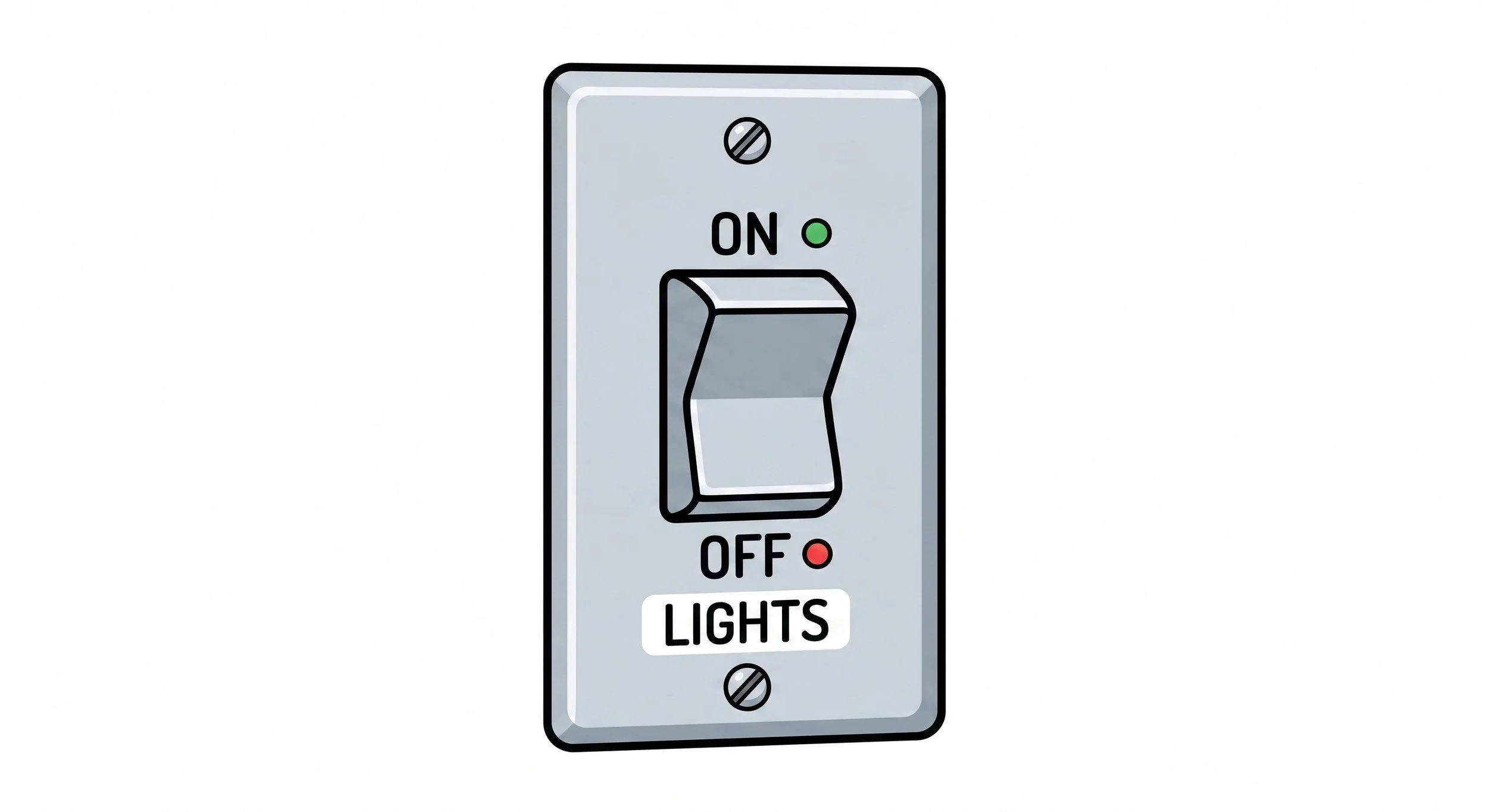
A light switch contains moving electrical contacts that experience wear every time the switch operates. Years of use can leave those surfaces worn, pitted, or coated with carbon deposits. As the connection deteriorates, resistance increases and the switch may become less reliable.
We frequently find switches in Upstate South Carolina homes that need replacement after approximately 10 years. Depending on operating conditions, installation, and frequency of use, replacement can be needed anywhere from one to 15 years. A heavily used switch can accumulate far more wear than one controlling a rarely used storage-room light.
Longer service is possible under suitable conditions. The U.S. Department of Housing and Urban Development’s Rehabilitation Guide notes that a quality residential light switch can remain in service for 20 years or longer under normal conditions. Manufacturers also commonly describe switch durability in operating cycles rather than years, because repeated operation is what wears the contacts and mechanism.
These different timeframes explain why a fixed replacement date is not particularly useful. A switch that needs repeated flipping after six years deserves attention then, rather than after it reaches a more convenient age.
Why Some Outlets and Switches Wear Out Much Sooner
Two outlets installed on the same day can be in very different condition a decade later. One may sit behind a couch with a lamp connected, while the other is used repeatedly for kitchen appliances or cleaning equipment. Their age is identical, but their working conditions are not.
Daily use and electrical demand
Frequent plugging and unplugging gradually wear the contacts that hold a plug’s blades. Once those contacts lose their grip, the connection becomes less secure, allowing resistance and heat to increase. A plug that repeatedly slides out is the visible result of wear that has already occurred inside the receptacle.

Kitchens experience this repeated use throughout the day. Garages and workshops serve power tools and demanding equipment, while home offices and entertainment centers remain connected to multiple electronics and chargers. Commercial break rooms, checkout counters, and equipment outlets can receive even more intensive use.
Kitchens experience this repeated use throughout the day. Garages and workshops serve power tools and demanding equipment, while home offices and entertainment centers remain connected to multiple electronics and chargers. Commercial break rooms, checkout counters, and equipment outlets can receive even more intensive use.
It is common for heavily used outlets to need replacement in as little as 5–10 years while other outlets in the property remain functional at 15 years. The devices experiencing the greatest use should therefore receive particular attention during an inspection.
Repeated overloading accelerates deterioration as well. Drawing more current than an outlet or circuit is rated to carry creates heat, and repeated heating and cooling damage plastic housings, contacts, and connections. A device can accumulate damage before its failure becomes obvious to the person using it.
Installation quality and older device construction
An outlet’s service life also depends on the work performed behind it. Loose connections, damaged conductors, and backstabbed terminals can cause premature failure even when the outlet itself is relatively new.
Backstabbed connections rely on spring-loaded contacts rather than a conductor tightened beneath a screw terminal. Those contacts are more prone to loosening through vibration and temperature changes. Replacing the receptacle without correcting the connection method or repairing damaged wiring can leave the new device facing the same problem.
Older outlets introduce another limitation. Devices installed before modern safety standards were established may lack grounding paths, tamper-resistant shutters, and the improved materials used in newer receptacles. Their older plastic and internal construction can deteriorate faster and leave them with fewer protective features than a modern replacement.
Power surges and repeated electrical disturbances
Lightning strikes, utility-grid fluctuations, and major appliances cycling on and off can expose electrical devices to voltage disturbances. HVAC equipment is one example of a substantial load that repeatedly starts and stops as the property is heated or cooled.
Each surge can stress internal components, and repeated exposure can gradually cause deterioration even when a single event leaves no visible damage. GFCI outlets, smart switches, and other electronic controls have additional components that can be affected.
A history of damaged electronics or electrical disturbances is useful information to share during an inspection. It may point to a reason for considering surge protection alongside the immediate outlet or switch work.
Greenville’s climate and the environment around the device
Humidity and moisture gradually affect metal contacts and surrounding materials. Bathrooms, garages, outdoor outlets, and damp work areas face greater exposure, while Greenville’s humid summers add to those conditions.
Temperature changes place stress on connections too. Materials expand in a hot garage or attic and contract as temperatures fall, repeating that cycle over the years. Dust and debris in workshops, unfinished basements, and crawl spaces can enter devices and interfere with their contacts.
Outdoor receptacles also face direct sunlight, which deteriorates covers, gaskets, and seals. Once a cover cracks or a seal fails, rain can reach areas it was intended to protect. In commercial spaces, cleaning chemicals, vibration, and accidental impact from equipment or carts create additional sources of wear.
The setting matters when selecting a replacement. A device suitable for a dry bedroom may not be the right choice for a damp work area or an outlet used repeatedly by cleaning crews.
Signs Your Electrical Outlets Need Replacement or Repair
Outlets can develop problems long before they stop working completely. We have met dozens of Greenville homeowners who noticed warning signs but delayed contacting an electrician until further damage occurred, including melted wiring inside the electrical box.
The following signs should be taken seriously when they appear during ordinary use. Do not remove covers, touch suspect wiring, or deliberately reproduce a fault to investigate it. An outlet showing unusual heat, scorching, electrical noise, or a burning odor should remain unused until the problem is addressed.
Plugs no longer fit snugly
If a vacuum cord keeps falling out or a charger slides out with very little resistance, the outlet’s internal contacts may have lost their tension. Those contacts do more than keep the plug from falling onto the floor. They maintain the electrical connection between the receptacle and the equipment.
When the grip becomes loose, the connection can generate resistance and arcing where the plug meets the outlet. The inconvenience of reconnecting the appliance is therefore only part of the problem. Continuing to use the worn receptacle allows the unreliable connection to remain under load.
An outlet that cannot hold plugs securely needs replacement. Tape, an adapter, or positioning furniture against the cord will not restore its internal contact pressure. If the entire receptacle moves in the wall, the electrical box and mounting also need attention.
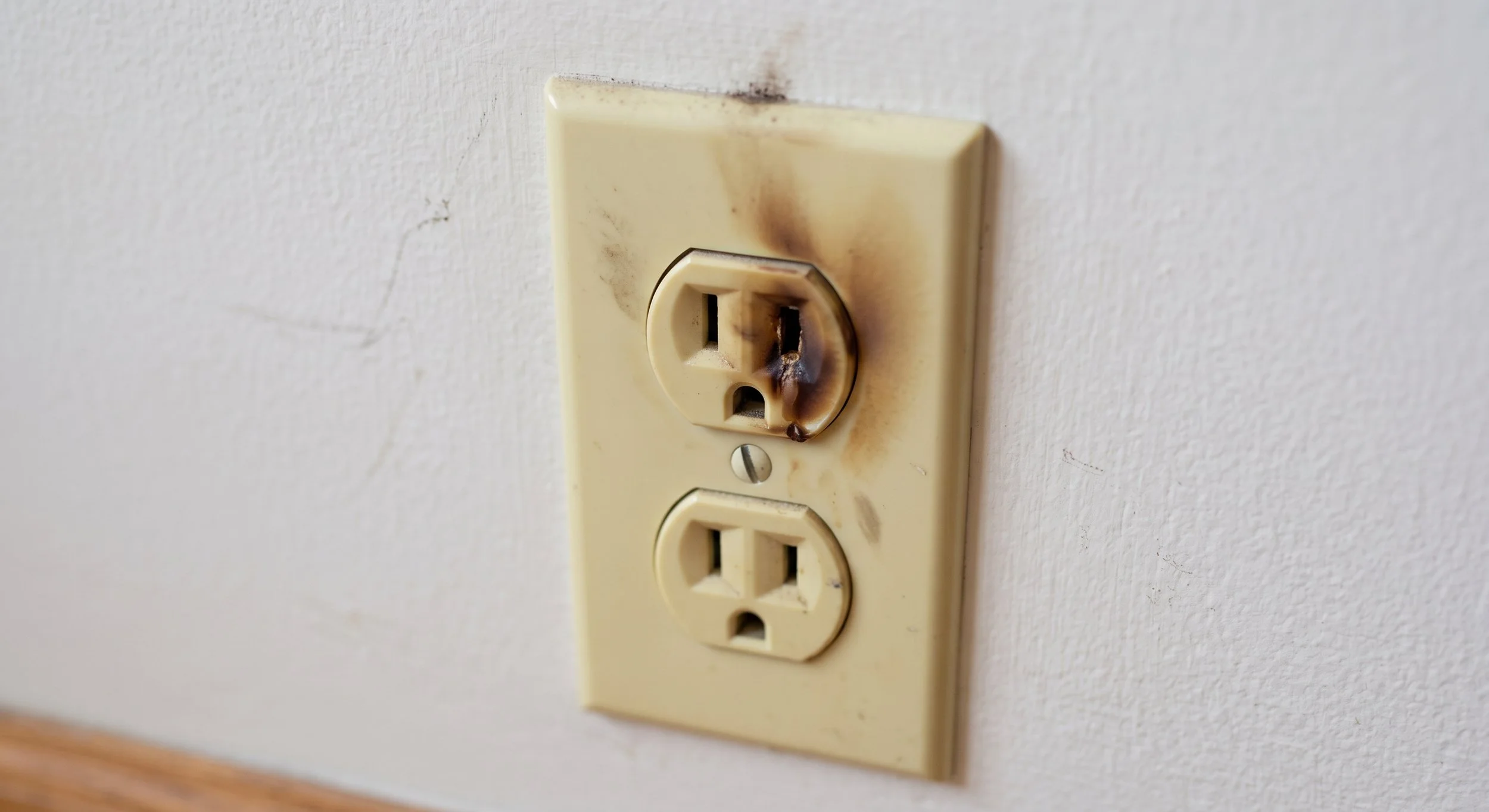
Brown marks, blackening, or melted plastic appear
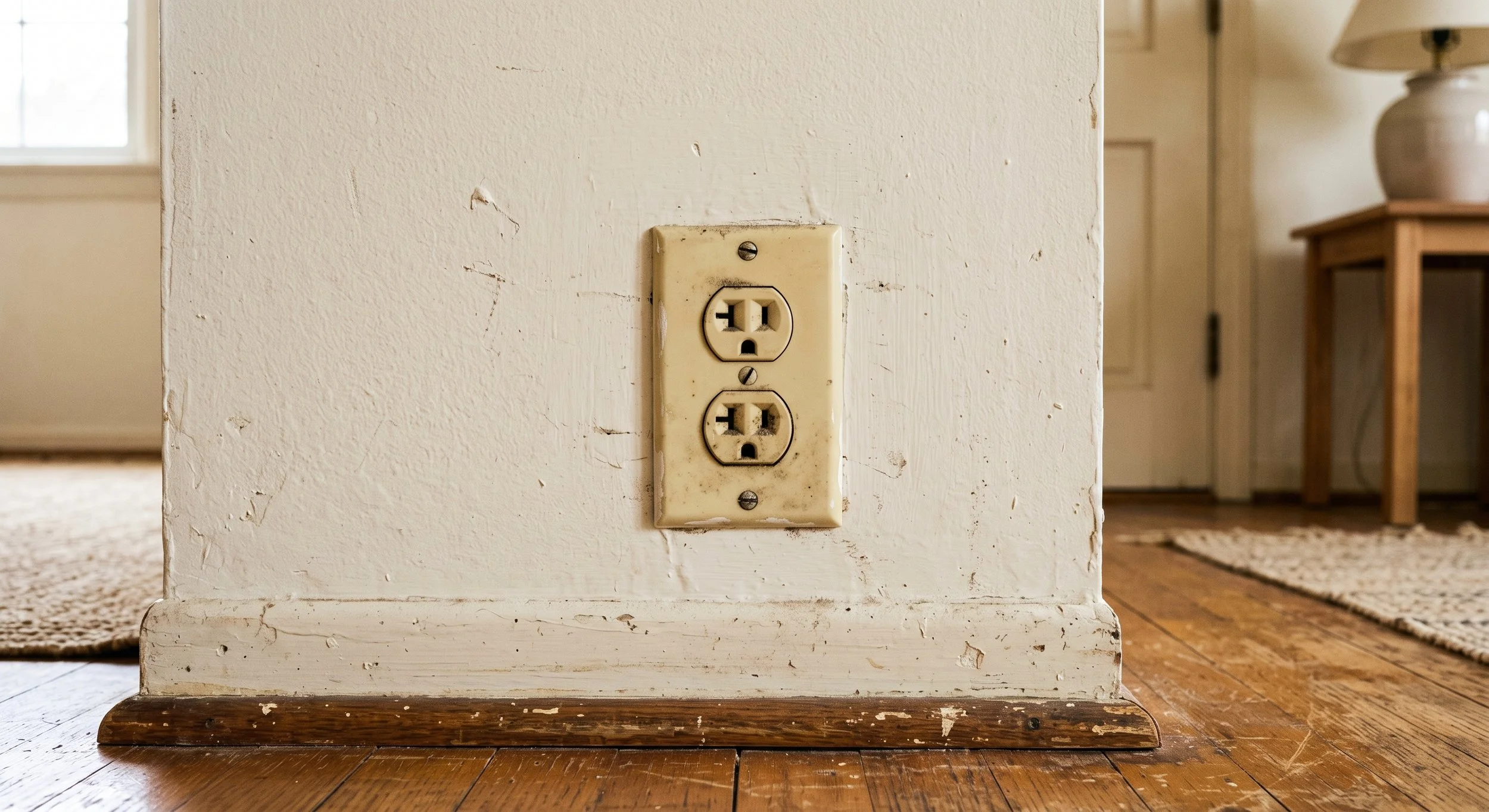
Discoloration concentrated around the plug openings can indicate that the connection has been overheating. Brown marks may progress to blackened areas, warped plastic, or visible melting as the heat damages the device.
The outlet can continue supplying power throughout this process. That is one reason property owners sometimes underestimate what they are seeing: the appliance still works, so the mark is treated as an appearance problem. In reality, the damage may extend to the appliance plug and insulation around the wires behind the outlet.
Replacing only the visible receptacle would leave that damage unaddressed. The electrician should examine the connected plug and surrounding conductors so the repair removes the affected materials and corrects the cause of the overheating.
The outlet or surrounding wall becomes unusually hot
An unusually hot outlet may be generating heat at an internal contact or where the circuit wiring attaches to the device. The surrounding wall plate or wall can become warm as that heat spreads beyond the connection.
An outlet can also overheat without anything plugged into its face. Depending on how the circuit is wired, its connections may carry power to other outlets farther along the circuit. An unused receptacle should therefore not be dismissed as harmless when it shows signs of overheating.
Some electronic outlets, including certain USB charging devices, produce normal operating warmth. Unexpected heat, increasing temperature, discoloration, or odor changes the situation and should be evaluated against the device’s instructions and the condition of its connections.
Buzzing, crackling, or a burning smell develops
An ordinary receptacle should not make persistent electrical noise during use. Buzzing and crackling may come from an unreliable connection or arcing, while a burning smell can indicate that insulation or other nearby materials are overheating.
These symptoms can appear before burn marks become visible. Waiting for the outlet to look damaged allows the condition to continue behind the wall. Large, repeated, or prolonged sparks deserve the same attention, particularly when accompanied by noise, heat, or discoloration.
Avoid connecting another appliance to see if the problem happens again. If there is smoke, fire, or active electrical burning, leave the affected area and call 911 from a safe location.
Power cuts in and out, or the outlet stops working
A lamp that loses power when its cord moves may have a damaged cord, plug, or receptacle connection. Office equipment that repeatedly shuts down can also be drawing attention to an unreliable connection elsewhere in the circuit.
A completely dead outlet does not necessarily need a new receptacle. An upstream GFCI may have tripped, a wall switch may control the outlet, or a wiring fault may have interrupted the supply. Installing a new device without identifying the cause can leave the property owner with exactly the same problem.
Electrical outlet repair in Greenville, SC, should begin with that diagnosis. The electrician needs to establish whether power reaches the outlet, whether its connections remain sound, and whether a protective device has interrupted the circuit for a reason.
A GFCI fails its test or will not reset
A GFCI outlet’s TEST and RESET buttons allow its protective operation to be checked according to the manufacturer’s instructions. If it fails the prescribed test or displays a persistent fault indication, it may no longer provide the protection it was designed to deliver.
Failure to reset needs a little more investigation. The outlet may have no incoming power, or it may be detecting an ongoing ground fault. In that situation, refusing to reset is not necessarily evidence that the receptacle has worn out.
Before arranging GFCI outlet replacement in Greenville, SC, describe what happened before the problem began. Recent water exposure, an appliance being connected, or a power interruption can help the electrician determine if the device has failed or another condition needs correction.
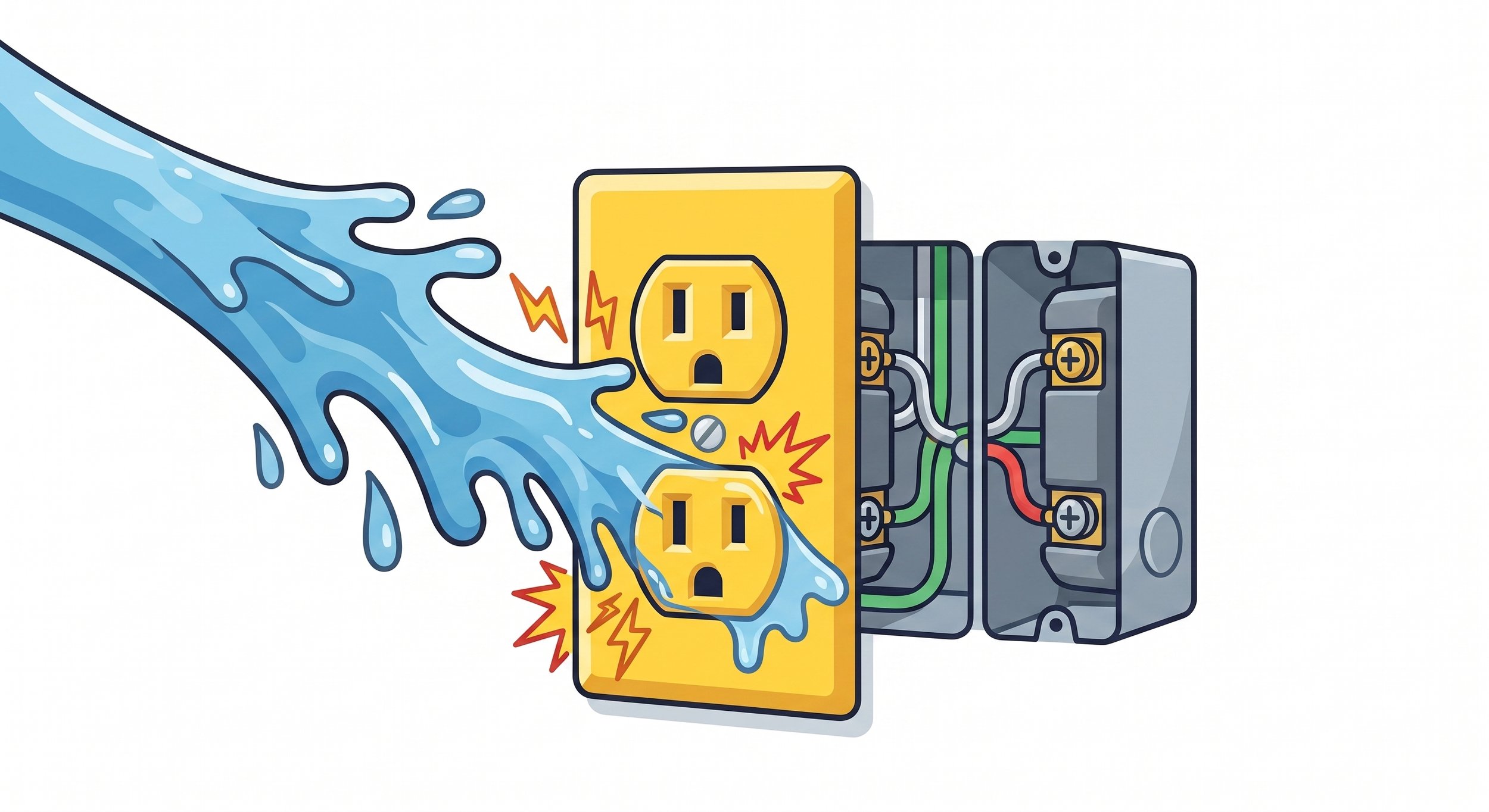
Water or physical damage has affected the outlet
A plumbing leak or water entering a garage, office, or exterior electrical box can reach components hidden behind the outlet face. Even when the surface dries, corrosion and contamination can remain inside. A water-damaged outlet needs replacement, and the surrounding wiring should be evaluated before the affected electrical equipment returns to service. Continuing to supply power does not prove the device escaped damage.
Cracks and broken sections are also reasons to act. A new decorative cover will not repair a damaged receptacle body, and a replacement outlet will remain vulnerable if the leaking pipe, failed cover, or other source of damage is left unresolved.
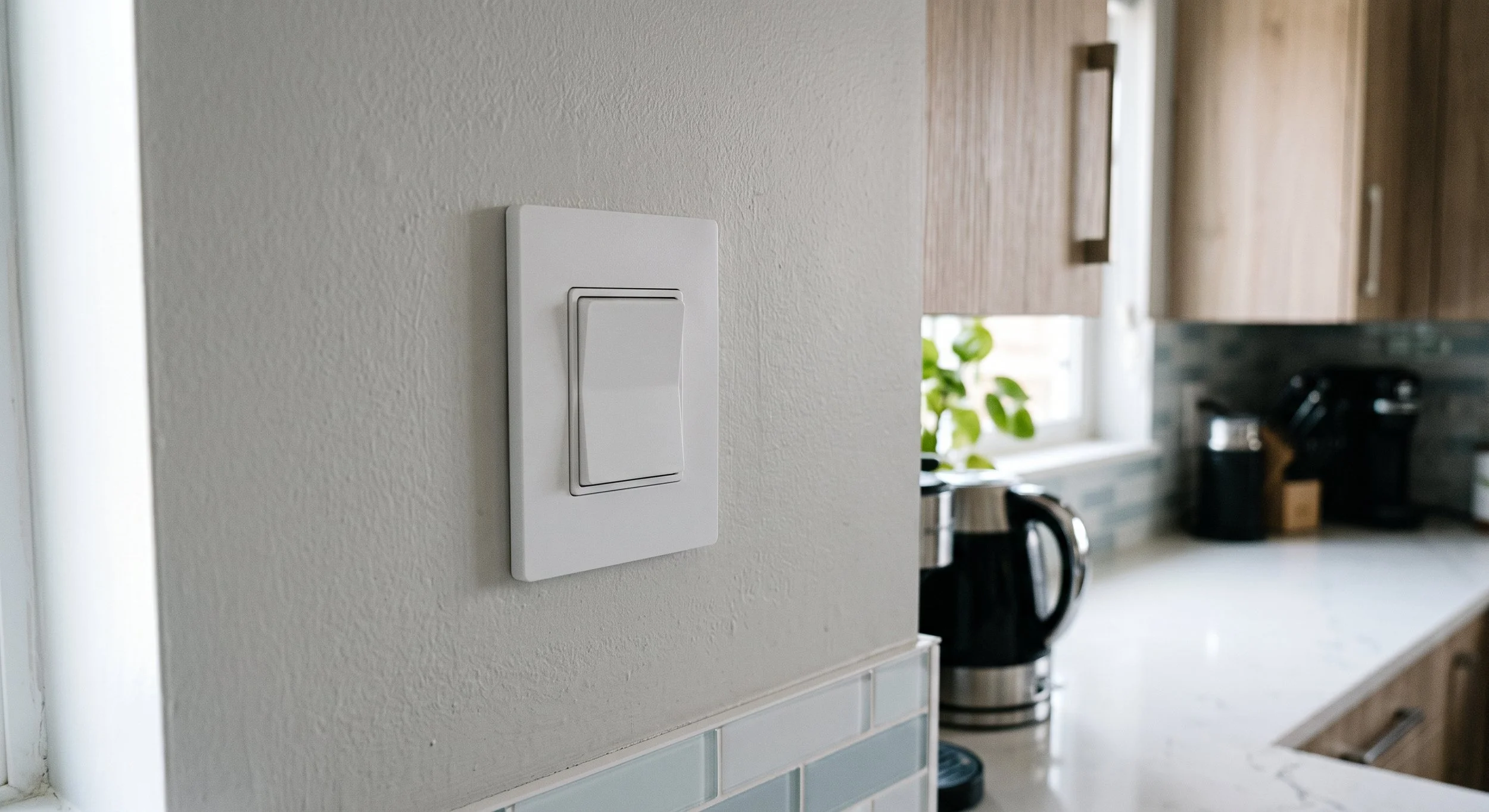
Signs Your Light Switch Needs Replacement or Repair
A light switch is easy to overlook because using it becomes automatic. You may begin flipping it twice or accepting a faint buzzing sound without thinking much about the change. Eventually, the workaround becomes part of the routine.
Those changes are worth noticing. The feel of the mechanism, the sound it makes, and the way the light responds can reveal wear that is not visible from the outside. Light switch replacement in Greenville, SC, often involves checking the connected lighting and wiring as well, because several different faults can produce similar symptoms.
The toggle feels loose or will not stay in position
A conventional toggle switch relies on an internal mechanism to move and hold its contacts in the intended position. If the toggle becomes floppy, the rocker breaks, or the switch will not remain on, the mechanism may be worn or damaged.
Continuing to push it back into position does not restore its ability to operate reliably. The switch needs replacement, with its mounting checked if the whole device moves when pressed.
Electronic controls designed to return to a resting position are different. Their operation should be judged against the manufacturer’s intended design rather than the feel of a conventional toggle.
The light responds only after repeated attempts
A switch that needs several flips before the light comes on may have worn contacts or a loose wiring connection. Wiggling it can temporarily bring the connection together, which makes the problem seem solved even though nothing has been repaired.
The Consumer Product Safety Commission’s Home Electrical Safety Checklist recommends having improperly operating switches inspected by an electrician. A switch does not need to show burn marks for an internal problem to deserve attention.
The fixture and bulb should be considered too. If you are searching for “light switch repair near me” because a light operates inconsistently, explain whether the issue began suddenly, followed a bulb change, or has gradually become worse. Those details help distinguish a failing switch from a problem elsewhere in the lighting circuit.
The switch buzzes, crackles, or visibly sparks
The ordinary mechanical click of a toggle is different from electrical crackling or sustained buzzing inside the switch. Visible sparking through the opening is another indication that the connection is not behaving normally.
The light may still turn on afterward, but the underlying condition can remain. Repeatedly operating the switch allows the same unreliable contact to continue carrying electricity.
Dimmer noise can sometimes relate to the connected lighting, so the control and load need to be considered together. Good light switch repair in Greenville, SC, identifies which component is responsible instead of replacing parts solely because they happen to be closest to the symptom.
Heat, discoloration, or a burning odor appears
A poor connection can generate heat inside the switch box before damage reaches the surface. Brown marks, warped plastic, and a burning odor may develop as the switch and surrounding materials deteriorate.
The Electrical Safety Foundation identifies heat, discoloration, and burning odors as electrical warning signs requiring professional attention. The fact that the switch still controls the light does not remove the concern.
Some dimmers become mildly warm during normal operation. Their temperature needs to be considered alongside the manufacturer’s instructions, the connected load, and any change from the way the control previously operated.
Lights flicker or dim unevenly after a bulb change
If the problem began after switching to LEDs, the existing dimmer may not be compatible with the new bulbs. Lights may flicker, cut out at low settings, or change brightness unevenly because the control and lighting were not designed to work together.
Replacing the dimmer with another of the same type could leave the problem unchanged. The bulbs must be dimmable, the control must support them, and any available adjustments should be considered.
A loose connection or fixture problem can also cause flickering. The timing of the symptom is useful, but the diagnosis should account for the whole installation.
Water has damaged the switch or dimmer
A roof leak, plumbing leak, or flood can reach the mechanism and connections inside a switch. After the visible moisture disappears, internal corrosion or contamination can continue affecting its operation.
Water-damaged switches and dimmers need replacement, with nearby electrical components checked for related problems. A switch continuing to turn the lights on does not demonstrate that it remains safe, just as a working water-damaged outlet does not establish that its internal contacts are sound.
When an Outlet or Switch Needs an Upgrade Instead
A replacement makes sense when a device has worn out and the existing arrangement still meets the property’s needs. Other situations call for a different solution. A new basic outlet will not add a missing ground, increase circuit capacity, prevent water entering a damaged enclosure, or make power available across the room.
This is relevant in Greenville County, where many properties have electrical systems and devices that have not been upgraded for more than 10 years. The way a room is used may have changed several times while its outlets and switches remained untouched.
An inspection can reveal both required corrections and worthwhile improvements. The distinction should be clear: some work addresses safety or requirements that apply to the installation, while other upgrades improve convenience and everyday use.
Replacing ungrounded two-prong outlets
Older two-slot outlets can leave homeowners relying on adapters to connect appliances and electronics with three-prong plugs. It may seem that replacing the receptacle with a three-slot model would solve the problem, but the third opening does not create a grounding connection behind the wall.
An electrician can determine if grounded wiring should be installed or if a permitted GFCI-protected replacement arrangement is suitable. A GFCI-protected replacement on ungrounded wiring requires the appropriate identification, including “No Equipment Ground.”
That distinction matters when choosing equipment. GFCI protection can reduce shock risk, but it does not provide an equipment ground. An appliance that requires grounding may still need a grounding or wiring upgrade even after GFCI protection is installed.
Adding GFCI protection where it is missing
GFCI stands for ground-fault circuit interrupter. It monitors the current leaving and returning through the circuit and interrupts power when it detects an imbalance that could indicate electricity taking an unintended path.
This protection is particularly important where electrical equipment is used near water or grounded surfaces. Kitchens, especially countertop receptacles, bathrooms, garages, unfinished basements, crawl spaces, laundry areas, and outdoor locations are common places where GFCI protection is required. Other locations near sinks or exposed to moisture can also be covered.
An older home that lacks the required protection in these areas has a safety gap, not simply an outdated outlet style. During GFCI outlet installation in Greenville, SC, the electrician should identify the protection already present and determine what the specific location and scope of work require.
An ordinary-looking outlet may already receive protection from an upstream GFCI receptacle or a GFCI circuit breaker. The absence of TEST and RESET buttons on its face does not establish that protection is missing.
The CPSC’s GFCI guidance explains the role of these devices and their testing procedure. Test GFCIs monthly according to the manufacturer’s instructions, including devices that otherwise appear to operate normally.
Understanding AFCI protection
AFCI stands for arc-fault circuit interrupter. It detects electrical characteristics associated with certain dangerous arcs and interrupts the circuit to reduce fire risk.
The arcing discussed earlier can occur at loose connections, damaged conductors, and deteriorating devices. A conventional breaker does not detect every such condition, which is why AFCI protection serves a purpose beyond ordinary overload protection.
Bedrooms have required AFCI protection for years, and many code cycles extend the requirement to other living areas. The electrician should apply South Carolina’s adopted requirements to the work being performed.
GFCI and AFCI protection are not interchangeable. GFCI protection primarily addresses shock hazards from ground faults, while AFCI protection addresses certain arcing-related fire hazards. A listed dual-function device can provide both, but the installation method and location still determine which parts of a circuit receive protection.
Choosing tamper-resistant receptacles
Tamper-resistant receptacles contain spring-loaded shutters that resist a foreign object being inserted into an individual slot. They are a useful upgrade where young children may reach outlets and are a standard requirement in new construction where applicable.
These shutters are built into the device, so their function does not depend solely on someone replacing a removable plastic cover after each use. The Electrical Safety Foundation explains how tamper-resistant receptacles help address this common childhood electrical hazard.
Tamper resistance does not replace grounding or GFCI protection. A suitable replacement may combine several features because each addresses a different concern.
Correcting outdoor outlets that fail after rain
An exterior outlet that repeatedly stops working after wet weather is telling you something about its installation. Water may be entering through a cracked cover, deteriorated gasket, failed seal, or unsuitable enclosure.
Replacing only the receptacle leaves the new device exposed to the same conditions. The work may need to include a weather-resistant outlet, appropriate GFCI protection, and a cover that protects the connection while a cord is plugged in.
The source of the water must be corrected as part of the job. Otherwise, the property owner may pay for another replacement without resolving why the first device failed.
Adding outlets where the property actually needs power
Extension cords stretched across an office or behind furniture often become a permanent response to an inconvenient layout. The original outlets may work perfectly, but their locations no longer support how the room is used.
Electrical outlet installation in Greenville, SC, should consider that daily use. A new home-office workstation, workshop bench, or reception desk may benefit from an outlet in a more practical location, provided the circuit can support the connected equipment.
Adding receptacles does not increase a circuit’s available capacity. Space heaters, window air conditioners, microwaves, and workshop or commercial equipment may require a dedicated circuit, redistribution of the load, or additional panel work. A panel upgrade becomes relevant when the existing equipment cannot support the required changes.
A breaker that repeatedly trips therefore does not automatically point to a worn outlet. The problem may be the amount of equipment asking for power from the same circuit.
Using a more durable outlet in a demanding environment
A receptacle used repeatedly by cleaning crews or employees connecting power tools can wear out faster than a lightly used residential outlet. Installing another basic device may lead to the same pattern of loose plug connections.
A commercial or specification-grade receptacle can provide better durability for frequent use. It must still match the circuit, equipment, and environmental conditions.
The heavier-duty device addresses mechanical wear. Damaged conductors, an overloaded circuit, or moisture entering the box must be corrected separately.
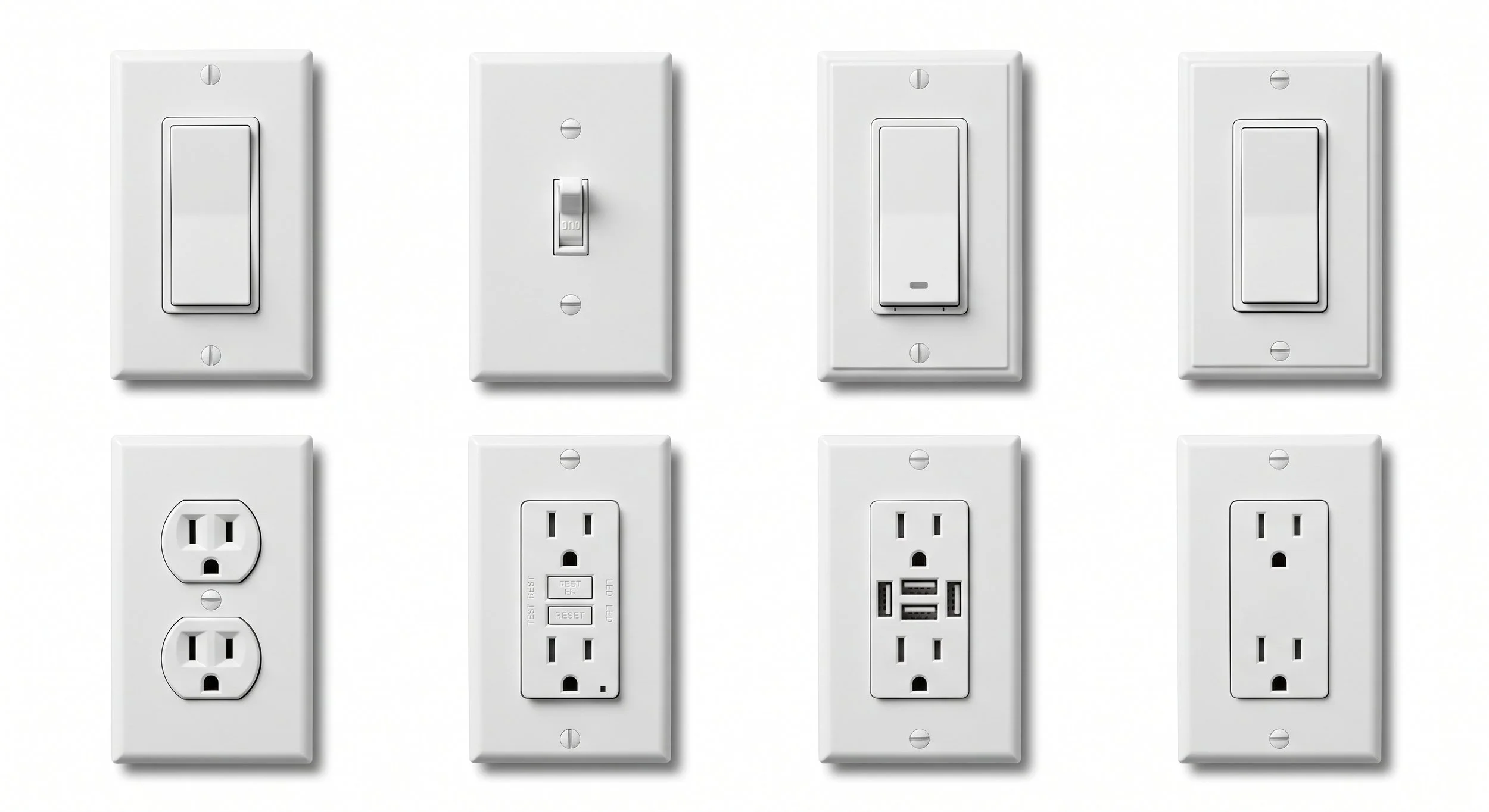
Smart Switches, USB-C Outlets, and Controls That Fit Your Daily Routine
Not every upgrade begins with a failure. Sometimes the existing device works, but the way it operates no longer suits the household or business.
A switch may be inconveniently located, a lamp difficult to reach, or storage-room lighting regularly left on after closing. These are useful things to mention when an electrician is already inspecting or replacing devices. The visit becomes an opportunity to solve the practical problem rather than simply install another version of the same control.
What smart switches and outlets can do
Smart switches can provide scheduling, remote operation, and control through compatible voice systems. Smart outlets offer similar functions for suitable plug-in equipment. A homeowner may want porch lighting to follow a schedule, while a business may want selected lighting to turn off after operating hours.
The product should be selected after the wiring is understood. Many smart switches require a neutral conductor in the switch box, while some models are designed for installations without one. Others need a compatible hub or network connection, and three-way or four-way arrangements may require companion controls.
The connected equipment matters just as much as the features. A control intended for lighting may not be suitable for a motor or fan, and electronic devices can require more electrical box space than a basic switch.
Before arranging light switch installation in Greenville, SC, explain how you want the lights to operate, which locations need control, and whether remote access is important. That gives the electrician a practical basis for selecting compatible equipment.
Where USB and USB-C outlets are useful
Built-in USB charging ports can reduce the number of adapters around nightstands, kitchen counters, reception desks, and workstations. The ordinary receptacle remains available while compatible devices charge through the built-in ports.
USB-C outlets are useful for newer phones, tablets, and some laptops, but the connector alone does not establish charging speed. The available wattage, charging protocol, cable, and connected device all affect performance. Power may also be shared when more than one port is in use.
A laptop that requires more power than the outlet supplies may charge slowly or still need its original adapter. Choosing the correct model before installation avoids paying for a convenient-looking outlet that does not support the equipment you intended to charge.
The electrician should also check box space and preserve any GFCI or other protection required at that location. USB charging is an added feature, not a substitute for electrical protection.
Matching dimmers, fan controls, and sensors to the equipment
An LED conversion is a common reason to reconsider an existing dimmer. The older control may still function, but it may not provide stable dimming with the new bulbs.
Dimmer switch installation in Greenville, SC, should begin with the lighting specifications. The control must support the bulb or driver type and the connected load, and a rating for incandescent lighting should not be assumed to apply to LEDs.
Ceiling-fan speed control requires an appropriate fan control rather than an ordinary lighting dimmer. Commercial lighting may also require a particular control method, so installing another basic dimmer is not always the right answer after fixtures have changed.
Timers and occupancy sensors can address lights or exhaust fans left running unnecessarily. Additional control locations can make stairways, hallways, and larger rooms easier to use without crossing a dark space to reach the only switch. The best improvement is the one that responds to how the property is actually used.
Why Older Greenville Properties May Need More Than a New Outlet
A newly installed outlet can look reassuring, but its face tells you very little about the wiring connected to it. Greenville’s older homes, renovated buildings, and commercial spaces often contain electrical work completed during several different periods.
A kitchen may have new cabinets, countertops, and wall plates while portions of the original wiring remain behind the walls. An updated commercial suite may have gained workstations and appliances without corresponding changes to its circuits. The visible improvements and the electrical system do not always share the same age.
This is why an outlet replacement sometimes uncovers an additional problem. The electrician may find heat-damaged insulation, deteriorated connections, or a three-prong receptacle without an actual grounding connection. A new device cannot restore damaged insulation or create a ground where one is missing.
In historic areas such as Hampton-Pinckney and the Colonel Elias Earle district, knowing what electrical work occurred during earlier renovations is particularly useful. Building age alone does not establish the condition of every circuit, and updated finishes do not demonstrate that concealed wiring was replaced.
Changes in use deserve attention as well. A spare bedroom that once powered a lamp may now contain computers, printers, monitors, and a portable heater. An older commercial circuit may be supplying equipment that did not exist when the space was first wired. Replacing the receptacle does not increase the amount of power that circuit can safely deliver.
Property owners sometimes hesitate to schedule an inspection because they worry a small problem will become a recommendation to rewire the entire building. Additional findings do not automatically mean that. Some repairs are limited to the wiring or connections inside one box; others extend along a circuit or require evaluation of the panel.
The purpose of the inspection is to establish that scope. Knowing which components remain suitable and which need correction gives the owner a clearer basis for decisions than replacing the visible device and hoping the rest is sound.
For more about the wiring behind your outlets and switches, read our guide to electrical wiring in Greenville. We explain common wiring types found in local homes and businesses, warning signs of deterioration, and when repairs or rewiring may be needed.
Why Timely Outlet and Switch Repairs Matter to Greenville Businesses
For a business, an unreliable outlet can affect far more than the convenience of the person using it. Refrigeration, payment equipment, lighting, workstations, and essential tools may all depend on a connection that receives little attention until it fails.
A Greenville restaurant can run refrigeration around the clock, while a salon may use several heating tools throughout the day. Cleaning equipment is plugged in and removed repeatedly, cords get pulled as equipment moves, and switches may operate throughout long business hours. That combination creates more wear than many devices experience in a home.
The electrical load also changes the consequences of a loose connection. A properly rated outlet should support its intended equipment, but a poor connection generates heat as current passes through it. The more current flowing through that faulty connection, the more heat it produces.
The working environment affects the repair
Commercial outlets may be exposed to water near sinks, workshop dust, cleaning chemicals, or impact from carts and equipment. A device suitable for a dry office may be inappropriate in a damp or demanding work area.
OSHA’s electrical requirements address equipment suitability and damage that could affect safe operation, including deterioration from moisture, corrosion, chemical action, and overheating.
This has a practical implication for commercial outlet repair in Greenville, SC. The replacement needs to suit the conditions that caused the previous device to deteriorate. Installing the same unsuitable type may restore power temporarily while leaving the business with the same underlying problem.
Fire damage is only one possible cost
NFPA estimated that electrical distribution and lighting equipment was involved in 16,930 fires annually in non-home properties during 2012–2016, causing $718 million in annual property damage. Electrical failure or malfunction contributed to approximately three-quarters of those fires. These figures include wiring, lighting, and other electrical equipment across businesses and other non-home properties.
A business can suffer a costly interruption without experiencing a fire. Losing power to a payment terminal can stop transactions. A refrigeration failure can put inventory at risk, while unreliable lighting or equipment can lead to canceled appointments and employee downtime.
An injury or fire creates additional liability concerns and can affect neighboring businesses. The consequences may extend beyond the room containing the damaged outlet, particularly where tenants share a building.
An inspection can turn a delayed repair into a required correction
Greenville’s fire inspectors enforce the Greenville Fire Prevention Code. If an inspection identifies an electrical hazard that violates the code, the business may be required to correct it and may receive a fine.
Under the State Fire Marshal’s enforcement process, a first violation generally results in a written order allowing 30 days for correction, although an immediate danger requires faster action. Uncorrected violations can lead to penalties of up to $1,000 per violation under that process.
More serious conditions can interrupt the use of the property. If the State Fire Marshal determines that a building or part of it is unsafe, the affected area can be required to remain vacant until repairs are completed, inspected, and approved.
These provisions do not mean that every damaged outlet produces a fine or closes a business. They explain why a genuine electrical hazard cannot always remain on a maintenance list until a more convenient time.
Planned repairs give a business control over the timing of equipment shutdowns and the preparation needed to protect operations. Employees can help by reporting loose plugs, damaged covers, unreliable switches, unusual odors, and repeated trips. Investigation of the wiring should remain with a qualified electrical professional.
Can You Replace Outlets and Switches Yourself in Greenville?
An outlet or switch replacement can appear simple when all you see is the device on the wall. The job becomes more complicated when you consider what must be established before the new device can be safely connected.
The person performing the work needs to identify the wiring, isolate the correct supply, verify that power is absent, select a suitable replacement, and make connections that remain secure when equipment draws power. They also need to recognize damage that should not be concealed behind the new cover.
Why restoring power is not proof of a safe repair
For a homeowner, the immediate goal may be getting the light or appliance working again. An incorrectly connected outlet can accomplish that while leaving a shock hazard. A poorly secured terminal may operate under a small load and begin overheating when more demanding equipment is connected later.
Turning off a light switch does not make the wiring behind it safe to handle. Even switching off a breaker requires verification rather than relying solely on a panel label or a light that no longer illuminates. A box may contain more than one circuit, and earlier work may not match what the homeowner expects to find.
The existing damage matters too. If an outlet overheated because of a loose connection or damaged conductor, replacing the receptacle without repairing that condition leaves the same hazard behind the wall. The new face can make the installation appear improved while obscuring the original problem.
This is the value of hiring a licensed, insured electrical contractor. The work includes determining why the device failed and checking beyond whether the light turns on afterward.
What City of Greenville and South Carolina allows homeowners to do
South Carolina allows qualifying homeowners to perform work on their own one- or two-family residence under an owner-builder exemption. The residence must be intended for the owner’s own use and occupancy rather than sale or rent, and applicable permit, inspection, code, and exemption procedures still apply.
Some minor owner-performed improvements also have specific exemptions. A simple device replacement should be considered separately from adding an outlet location, extending wiring, or installing a new circuit.
For a property under city jurisdiction, confirm the scope with the City of Greenville Building & Permit Center. Properties under county jurisdiction should consult Greenville County Building Safety.
The legal exception does not remove the need to understand the wiring and verify the completed work. A homeowner who is unsure what is behind the cover has a practical reason to obtain professional help before beginning.
Why an untrained maintenance employee should not perform the repair
Business owners face a different decision. An employee may be comfortable replacing hardware or handling general maintenance without having the electrical training needed to identify a hazardous connection or choose the correct device for the equipment.
The risk extends to everyone who later uses that outlet or switch. Employees and customers cannot see whether a terminal was properly secured or whether damaged insulation remains inside the box.
An unsuccessful repair can also interrupt refrigeration, payment systems, lighting, or workstations. Spoiled inventory, lost transactions, downtime, and injury-related liability can make an attempt to save on a service call considerably more expensive.
OSHA’s electrical work-practice requirements address de-energizing equipment, controlling the energy source, and verifying that equipment can be treated as de-energized. A maintenance title alone does not establish the qualifications needed to carry out that work.
The homeowner exemption does not automatically authorize employees to perform electrical work on commercial premises. Applicable licensing rules and exemptions should be confirmed for the property and task. Scheduling a qualified contractor allows the business to coordinate the shutdown, address the cause of the failure, and document the completed correction.
The Benefits of Replacing Worn Outlets & Switches Before They Fail
The advantage of early replacement is often the damage that never has a chance to develop. Correcting an overheating connection can prevent continued deterioration of the outlet, appliance plug, and nearby insulation. A repair that remains inside one electrical box is generally easier to manage than damage that extends into wiring and surrounding building materials.
Outlets and switches are only part of the picture. Our article on why prompt electrical repairs matter covers other problems homeowners and businesses should address early, including repeatedly tripping breakers, damaged wiring, and overloaded circuits.
That difference can amount to thousands of dollars in avoided electrical and property repairs. It also reduces the disruption of an unexpected failure. A homeowner can schedule work around a home office or family routine, while a business can prepare equipment and select a time that causes less interruption.
A planned visit also creates room to make useful decisions. The electrician can explain if the location needs GFCI protection, if a worn outlet would benefit from a more durable device, or if an LED-compatible dimmer would solve an existing lighting problem. USB-C charging, better outlet locations, and suitable sensors or timers can be considered while the work is already being planned.
Replacing a basic outlet with another basic outlet does not automatically reduce electricity bills. Savings from smart controls, timers, and occupancy sensors depend on reducing unnecessary use. Their value should be tied to what they will actually change in the property.
Early attention also gives owners a clearer maintenance plan. Immediate hazards can be separated from improvements that can wait, allowing larger electrical projects to be budgeted rather than discovered during an emergency.
What Happens When You Schedule an Outlet or Switch Inspection?
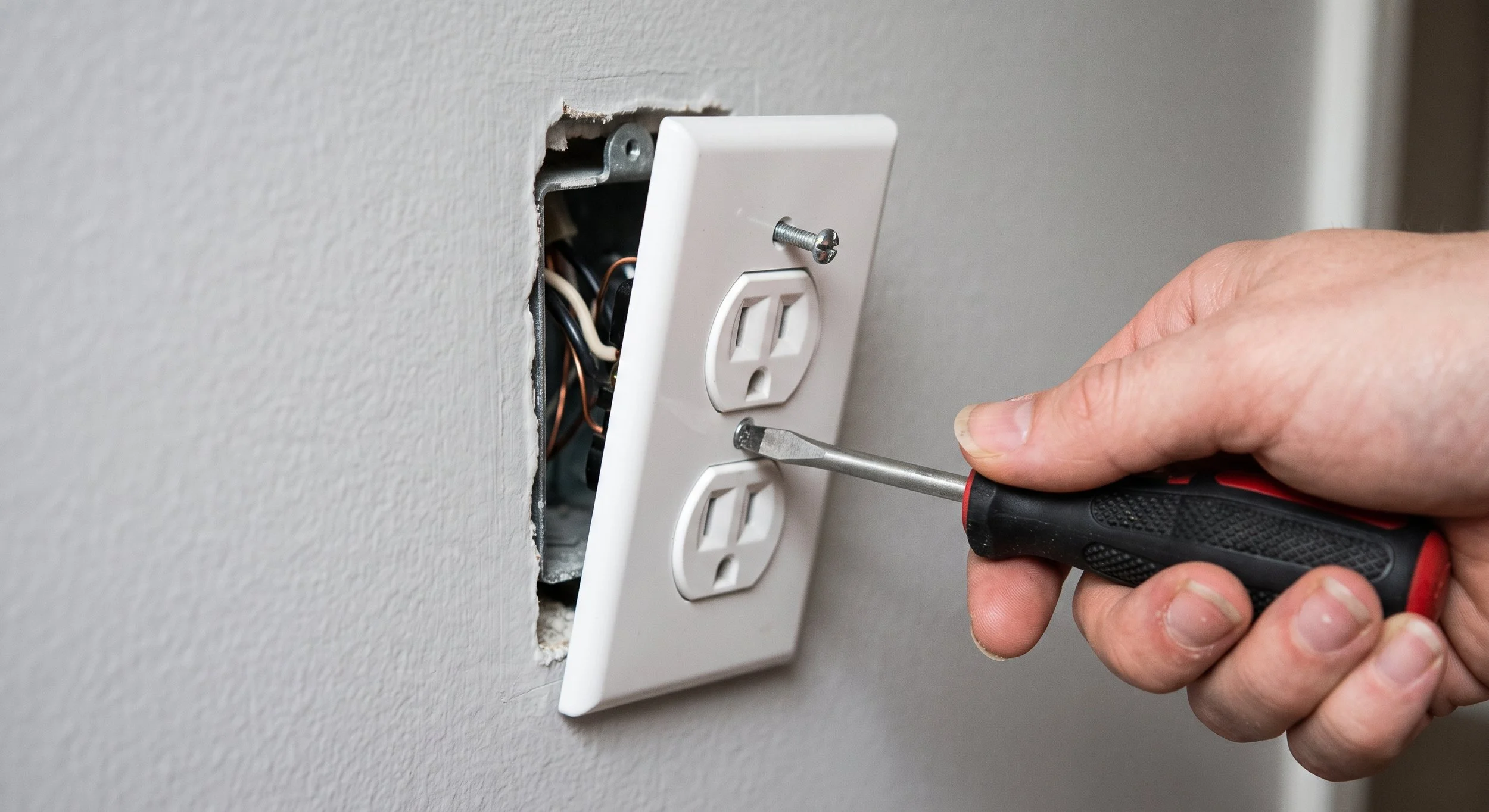
Property owners sometimes hesitate to book a service visit because they do not know what the electrician will do or how a small replacement might develop into additional work. A clear inspection process should answer those questions before repair decisions are made. Redland Electric begins by identifying the affected devices and examining the circuit involved. The outlet or switch that prompted the call is the starting point, but the diagnosis may show that the cause is elsewhere.
-
Explain when the problem occurs, what equipment was connected, and whether other outlets or lights are affected. Recent water exposure, remodeling, new appliances, LED bulb changes, and repeated trips can help the electrician narrow down the cause.
-
The electrician checks how the outlet or switch receives power, including relevant breakers, wall controls, upstream receptacles, and GFCI or AFCI protection. This can explain why a device appears dead even when its own components have not failed.
-
Before handling conductors, the appropriate supply is isolated and the absence of voltage is verified. Commercial work also requires coordination around equipment shutdowns and workplace safety procedures.
-
The evaluation may include plug retention, switch operation, mounting, terminal connections, insulation, grounding, conductor compatibility, and electrical box condition. Signs of moisture, overheating, corrosion, or unsuitable earlier work help determine what must be corrected.
-
The electrician distinguishes a straightforward replacement from a wiring repair or upgrade. The explanation should include the reason for the work, available options, pricing, expected interruptions, and any applicable permit or inspection requirements.
-
Damaged materials and unreliable connections are addressed along with the device. Testing depends on the work and may include wiring configuration, grounding where provided, protective-device operation, switch function, and lighting compatibility.
-
The final discussion should cover relevant TEST and RESET procedures, labels, smart-control operation, and any additional work recommended. The owner should understand what was completed and what, if anything, remains to be addressed.
You can prepare by making the affected areas and electrical panel accessible. Businesses should identify equipment that cannot lose power without preparation. There is no need to recreate a fault for the electrician; a clear description of what occurred is more useful than exposing yourself to the problem again.
An outlet or switch inspection focuses on the affected devices and related circuit. To learn what a broader evaluation involves, read our guide to electrical safety inspections in Greenville, which covers the panel, wiring, grounding, protective devices, and how we report the findings.
Frequently Asked Questions About Outlets and Switches in Greenville
-
There is no fixed replacement interval for every outlet, although Redland Electric commonly finds safety concerns around 15 years and earlier wear in heavily used devices. Outlets used frequently may need replacement after 5–10 years, while any outlet showing overheating, loose plug connections, damage, or unreliable power needs attention regardless of age.
-
Yes, an outlet’s connections may carry electricity to other devices farther along the circuit even when its own receptacle openings are unused. A loose or damaged connection can therefore overheat without an appliance plugged into that outlet.
-
Possible causes include an upstream GFCI trip, a wall switch controlling the outlet, a failed receptacle, or a loose connection. An electrician should check the power supply and circuit before assuming that replacing the outlet will restore reliable operation.
-
Yes, ungrounded two-prong outlets are worth replacing regardless of age. The electrician should determine if grounded wiring is needed or if a permitted, correctly labeled GFCI-protected arrangement is suitable, understanding that GFCI protection does not create an equipment ground.
-
Once a month, per the Consumer Product Safety Commission and manufacturer guidelines for every GFCI outlet in a home or business. Testing takes seconds: plug in a lamp or nightlight, press TEST to confirm it cuts power, then press RESET to restore it, and any GFCI that fails to trip or won't reset after that test needs professional attention right away. Test again after any major storm or power surge, since lightning and grid fluctuations are a common cause of GFCI failure even when the outlet looks fine.
-
No, GFCI protection primarily reduces shock risk from ground faults, while AFCI protection reduces fire risk from certain hazardous arcing conditions. A listed dual-function device can provide both forms of protection where appropriate.
-
Requirements depend on the scope of work and the permitting authority responsible for the address, and South Carolina provides exemptions for certain qualifying owner-performed work. Confirm device replacement separately from new wiring, outlet relocation, or circuit additions with the city or county permitting office.
-
Some smart switches are designed for installations without a neutral conductor, while many other models require one. Have the wiring, electrical box space, connected lighting, and any hub requirements checked before purchasing a device.
-
Flickering can result from incompatible bulbs and dimmers, unsuitable settings, a fixture problem, or a loose connection. If it began after changing to LEDs, bulb and dimmer compatibility should be checked as part of the diagnosis.
-
A single outlet or switch replacement through a licensed Greenville electrician typically costs between $80 and $250, with GFCI outlets and dimmer switches running toward the higher end of that range. Local project data across the Upstate area puts a typical outlet or switch service call between about $150 and $500, averaging around $270 to $370, depending on how many devices are involved and whether any wiring issues turn up once the cover plate comes off. Schedule a consultation with a licensed electrician in Greenville to receive a detailed breakdown on labor, materials, testing, and applicable permit costs so you understand what the proposed service includes.
-
A search for “outlet installation near me” should lead to a licensed, insured contractor who evaluates the wiring, circuit capacity, required protection, and equipment the outlet will serve. Redland Electric provides the best outlet installation, replacement, troubleshooting, and related electrical improvements for Greenville homes and businesses.
-
No, South Carolina doesn't extend the same exemption to businesses that it gives homeowners working on their own primary residence. Commercial electrical work generally requires a licensed electrcial contractor once a project passes $10,000 in value, and many local jurisdictions, Greenville included, still require permits and a licensed electrician for electrical work in commercial spaces regardless of dollar value. Hiring a licensed electrician instead of assigning the work to an in-house employee avoids the code-compliance, safety, and liability risk that comes with unlicensed electrical work on a business property.

Redland Electric: Outlet and Switch Services for Greenville Homes and Businesses
Choosing an electrician for an outlet or switch problem is partly about the immediate repair and partly about what happens if the inspection reveals something more. A worn receptacle may need a straightforward replacement, but damaged wiring, missing grounding, or insufficient circuit capacity requires a contractor who can address the additional work.
Redland Electric provides that range of support for residential and commercial properties throughout Greenville County. Its electricians are licensed, insured, local, and experienced in the electrical needs of homes and businesses across the area.
For property owners searching for an “outlet installer near me,” the company offers more than installation of the visible device. Its team can diagnose unreliable power, explain the condition of the existing wiring, and help select outlets and controls suited to the property’s daily use.
Complete outlet and switch installation, repair, and upgrades
Redland Electric’s outlet and switch services cover basic replacements, new locations, protective devices, and modern controls. The team can install outlet and switch upgrades during a service visit, a remodeling project, or a larger construction schedule.
Redland Electric provides a complete range of outlet and switch services, including:
Outlet installation, replacement, relocation, troubleshooting, and repair.
Light switch installation, replacement, troubleshooting, and repair.
GFCI outlet installation, replacement, and testing.
AFCI outlet or circuit-breaker installation.
Dimmer switches and compatible lighting controls.
Three-way and four-way switch wiring.
Smart switch and smart outlet installation.
USB and USB-C charging outlets.
Tamper-resistant receptacles.
Dedicated circuits for major appliances and other equipment.
Outdoor and weatherproof outlet installations with suitable covers.
Rewiring ungrounded two-prong outlets for grounded three-prong receptacles.
Ceiling-fan and exhaust-fan switch wiring.
Occupancy sensors, motion controls, and timers.
Electrical code-compliance inspections and upgrades.
The company supports individual replacements, multiple-room improvements, home remodeling, new residential construction, and commercial builds. The scope may be small or extensive, but the work still requires appropriate devices, secure connections, and completed testing.
Prepared electricians and support beyond the device
Each electrician on the team is licensed, insured, local, and experienced with the kind of properties found throughout Greenville, from older homes in the city's historic districts to newer commercial builds. They arrive fully equipped to complete the job without unnecessary delays, and they handle outlet and switch installation for new construction, home remodeling, and commercial projects of any size. Redland Electric specializes in more than outlet and switch replacement too. If an inspection turns up other electrical concerns, the company also provides wiring and rewiring services, circuit breaker work, electrical panel upgrades, and surge protection installation, meaning property owners work with one electrical contractor rather than juggling several for different parts of the same problem.
Personal oversight and a commitment to Greenville
Redland Electric is led by founder David Tkach, a Master Electrician who personally oversees projects to make sure expectations are met and service stays consistent. Choosing Redland Electric means working with Greenville local electricians who are invested in the community and focused on getting a property's electrical system powered safely and correctly the first time. Scheduling an outlet or switch inspection with Redland Electric is the most direct way for Greenville homeowners and businesses to find out exactly what their property needs.