
Home EV Charging Station: Installation Guide for Greenville Homeowners
Why Greenville Homeowners Are Installing EV Chargers
If you own an electric vehicle, you've likely searched for "charging station near me" more times than you can count. The good news? The Greenville area offers over 15 publicly available charging stations with more than 95 charging ports, with more charging stations being under construction each year.
However, South Carolina's EV infrastructure is still developing. Many EV owners in Greenville experience long wait times, non-operational ports, stations under maintenance, poorly maintained equipment, slow charging speeds, and payment or app failures that waste your valuable time.
Despite these challenges, South Carolina residents are embracing electric vehicles. The number of electric and plug-in hybrid vehicles in South Carolina has grown dramatically. From around 2,790 in 2017 to over 20,000 by 2024, with thousands more being registered annually.
With the currently developing EV infrastructure and the continuously increasing number of EV owners, it's no surprise that a significant number of South Carolina residents are choosing to install EV charging stations at their homes. In fact, over 80% of EV charging takes place at home, which highlights just how important home EV chargers are for electric vehicle ownership.
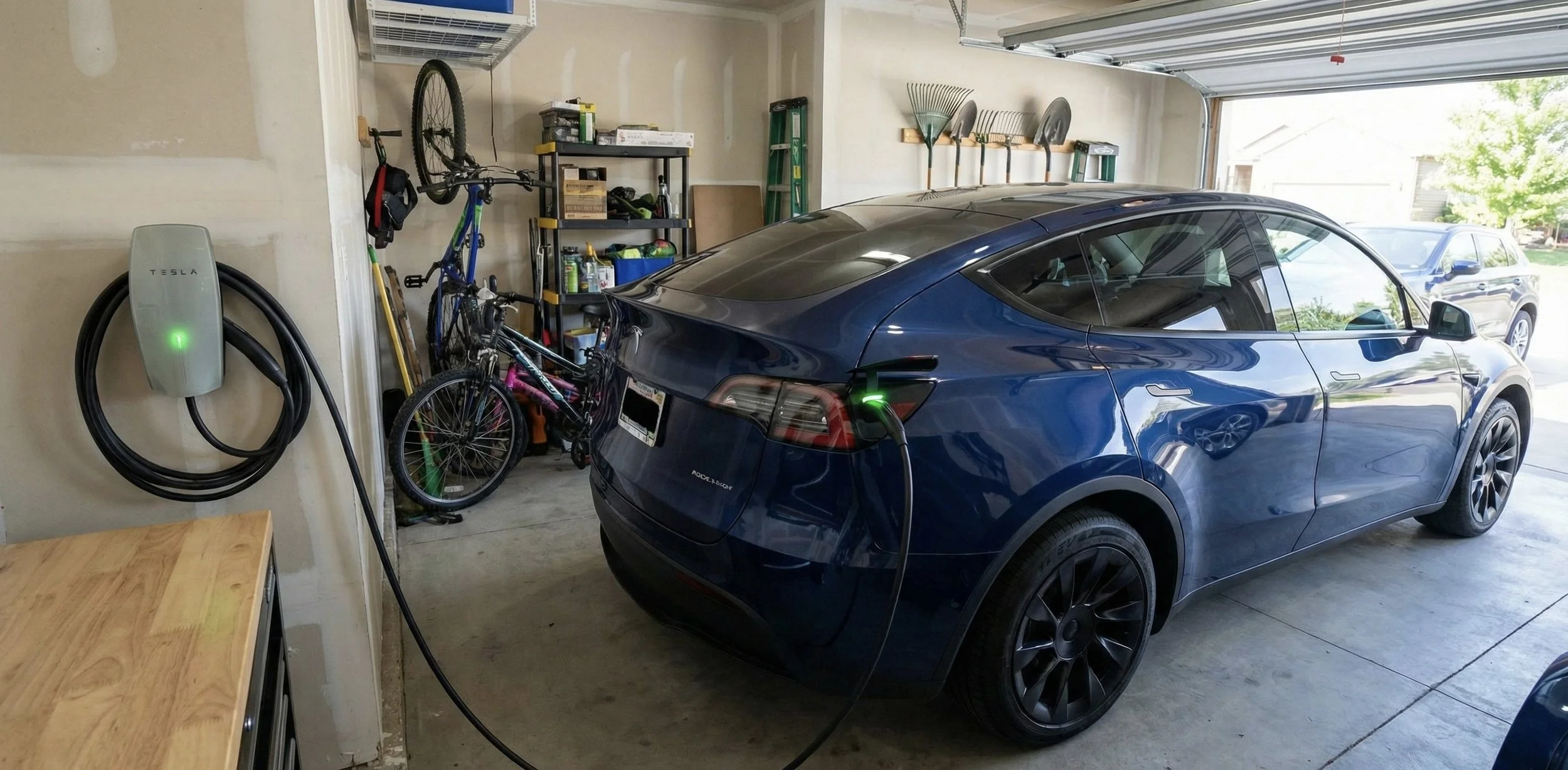
Greenville homeowners have an additional advantage: the majority of single-family homes in Greenville, especially outside the dense downtown area, are built with garages, over 2,500 homes feature garages that are perfect for EV charging station installations.
The Benefits of Home EV Charging
Convenience is the top reason homeowners install EV chargers at home. You can charge your vehicle overnight, between trips, or before heading out. No more waiting 45 minutes at a public station. Simply come home and plug in.
Cost savings are another major advantage. Public charging stations are nearly twice as expensive as home charging, averaging 37 cents per kWh compared to just 17 cents per kWh at home.
Reliability means you don't have to worry about malfunctioning equipment or driving to multiple stations to find an available port. Your charger is always ready when you need it, supporting your daily commute without the hassle of waiting in line.
Types of EV Chargers and Installation Costs
When planning to install an EV charger at home, understanding the different charging levels and their costs helps you make the right choice for your needs and budget.
Level 1 Charging Stations
Level 1 charging stations are the most basic option, powered by a standard 120V household outlet. They typically don't require installation costs or a licensed electrician because they plug directly into your garage outlet.
Level 1 chargers are the slowest option, providing only 3-5 miles of range per hour and roughly 40 miles overnight. A full battery charge can take over 24 hours, making this option best suited for minimal daily commute needs.
We've noticed that the majority of Greenville homeowners who choose Level 1 chargers either work from home or commute less than 20 miles per day. Many select this option because of the almost nonexistent installation costs and no need for electrical upgrades.
We recommend Level 1 charging stations if you have minimal daily driving, work from home, or own a plug-in hybrid vehicle. For fully electric vehicles with longer ranges, this charging speed may not be practical.
Cost Breakdown: Level 1 charging cords are often included with your EV purchase. If you need to purchase one separately, expect to pay $100-$600. You may need a dedicated outlet added to your garage, which involves minimal installation costs. Popular Level 1 charger brands include Tesla, ChargePoint, Lectron, and Emporia.
Level 2 Charging Stations
Level 2 EV charging stations are the most preferred option for Greenville homeowners, and there are several compelling reasons why.
These stations require 240V power, considerably more than Level 1 chargers. They deliver 10 to 60 miles of range per hour, depending on the charger's output and your vehicle's efficiency. Most EV vehicles can fully charge overnight, often in under 6 hours.
Level 2 charging stations are perfect for daily commuting, weekend trips, quick mid commute charging, and overnight charging. They include convenient features like WiFi connectivity, app control, energy use tracking, and customizable charging schedules. You can charge during off peak hours to save money and maintain full control over your electricity usage.
The convenience factor is why Level 2 chargers are preferred by most Greenville homeowners. They're designed to make EV ownership easy and stress free.
Cost Breakdown: Installing a Level 2 charging station typically ranges from $1,000 to $2,500+. Here's what you can expect:
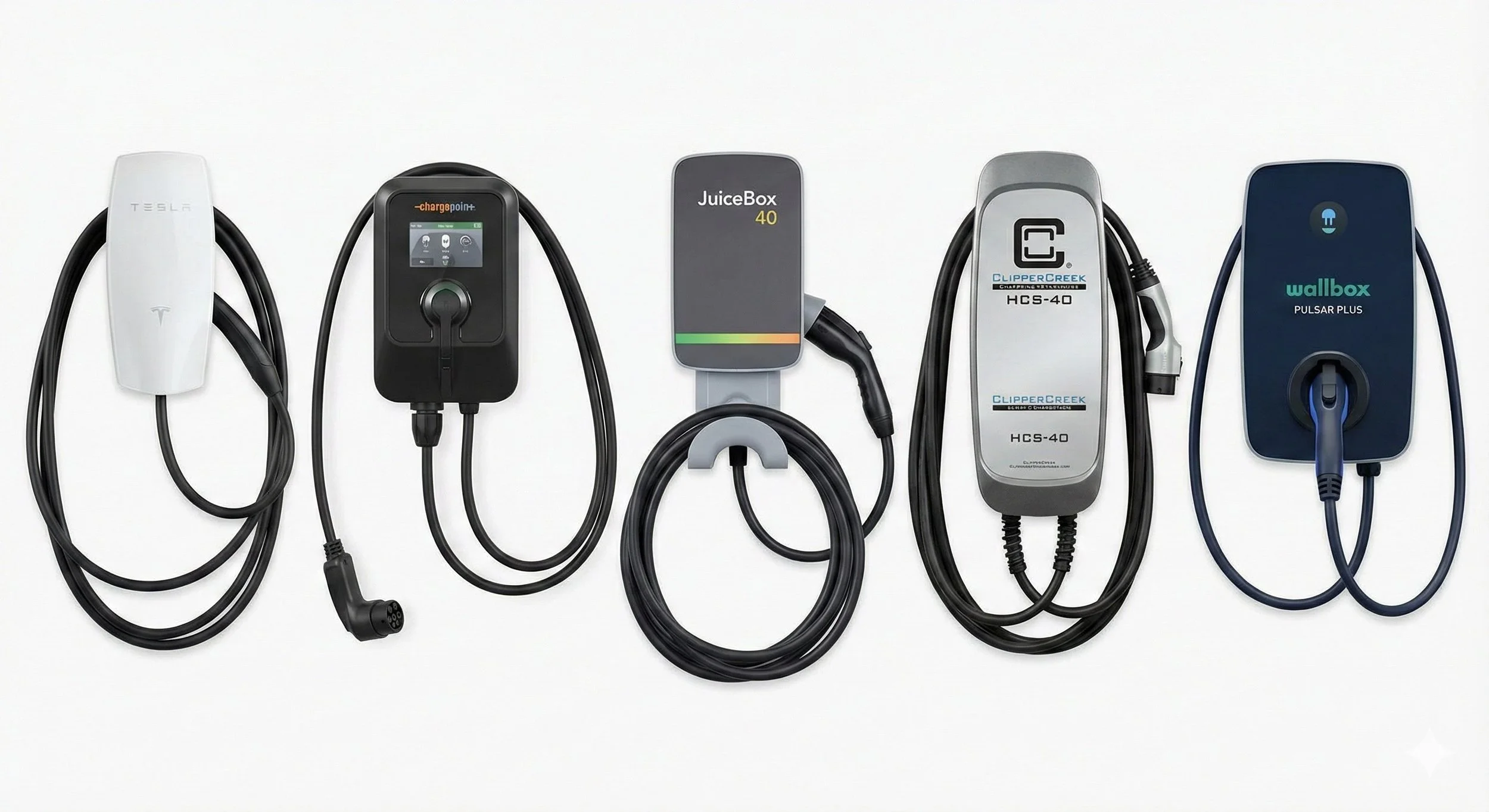
Charging Unit: $400-$850, depending on brand, quality, charging capabilities, and features. Popular brands include ChargePoint, Emporia, Wallbox, Grizzl-E, Tesla, and JuiceBox.
Installation Labor: $400-$1,600, performed by a licensed electrician. The price varies based on the distance from your electrical panel, whether the installation is inside or outside, whether it's wall-mounted or pedestal-mounted, and specific wiring requirements.
Electrical Panel Inspection and Potential Upgrade: Before any EV charger installation, your electrician must inspect your electrical panel to ensure it has sufficient capacity. Your panel may require an upgrade if it has low capacity, is outdated, is an unsafe type, or lacks space for a new dedicated circuit.
In Greenville, the majority of homes were built before the 1990s, which means we often encounter properties that need electrical panel upgrades before Level 2 charging stations can be safely installed. A new or upgraded electrical panel typically costs $1,500-$4,000.
We strongly recommend scheduling a professional electrical panel inspection before committing to a Level 2 charging station to determine if your panel qualifies for the installation.
Permit Requirements: Installing a Level 2 charging station in South Carolina requires a permit to ensure code compliance and safety, especially when the installation involves wiring to your electrical panel or installing new circuits. Your electrician will handle the permit application and conduct the required safety inspection. This is why hiring a locally licensed electrician is essential for Level 2 ev charger installation.
Level 3 Charging Stations
Level 3 charging stations are not suitable for residential use. They require very high electrical power (often 480 volts), commercial-grade equipment, utility approvals, and extremely high installation costs. The amperage demands far exceed what residential electrical systems can safely support.
How to Save on EV Charger Installation
While South Carolina doesn't offer direct state tax credits or rebate programs for EV charging stations, you may qualify for the Alternative Fuel Vehicle Refueling Property Credit, federal tax credit worth up to $1,000 to offset home EV charger installation costs.
Several utility providers have implemented rebate programs to promote home EV charging and encourage EV adoption. Check with your electricity provider to see if any benefits are available for the electricity used to charge your vehicle.
To save on installation costs, consider installing your charging station close to your electrical panel. The further your desired location is from the panel, the higher the installation price. Many electrical companies offer discounts on EV charger installations when bundled with other electrical services or projects. Ask your electrician about available options.
Why Choose Redland Electric for Your EV Charger Installation
The electrical team at Redland Electric is here to guide and support your electric vehicle charging station installation. Our team of electricians works closely with you to select the best EV charging station for your home, help you obtain the required installation permit, professionally and safely perform the installation, and conduct thorough testing and inspection to ensure everything meets South Carolina's local safety codes and standards.
We install both Level 1 and Level 2 EV charging stations at properties throughout Greenville County, both inside garages and at exterior locations.
Complete Electrical Services
If your EV charger installation requires an electrical panel upgrade, our electricians can handle that too. We'll ensure your electrical panel can safely support the new load and meets all requirements for efficient operation.
If your installation requires extended wiring, our team can install new electrical wiring from your panel to your desired EV charger location.

Local Experience You Can Trust
We are Greenville's local electricians, here to support homeowners with their electric vehicle charging station needs. Our team consists of South Carolina licensed, insured, and locally experienced electricians with over 25 years of experience helping South Carolina homeowners and businesses with electrical solutions.
We believe in transparent pricing and making high-quality electrical services accessible to all Greenville homes and businesses. That means no hidden fees, we clearly break down the costs of your electrical project and work within your budget.
We don't take a one-size-fits-all approach. We take the time to determine which EV charging station works best for your preferred location, meets your electrical demands, and professionally inspect your electrical panel to ensure your EV charger can be safely installed.
Why Licensed Electricians Matter
EV charging station installations require working with high-voltage wiring, circuits, and compliance with state and local electrical codes. Licensed electricians ensure your charger is safely installed, permitted, and inspected, reducing the risk of electrical fires, equipment damage, or voided warranties.
Your property's safety is on the line. Improperly installed charging stations can lead to electrical fires, damaged wiring, overloaded electrical panels, and frequent breaker trips.
South Carolina requires that EV charger installations are performed only by licensed electricians to meet local and state electrical codes of compliance.
EV Charger Installation Process
We follow eight straightforward steps to complete every installation, ensuring safe installation and creating a seamless experience for you:
Step 1: Initial Assessment – Our electrician arrives at your property to perform a thorough inspection of your electrical panel and capacity, discuss your preferred charger location, and understand your needs.
Step 2: Electrical Load Testing – We test your electrical panel to determine if your electrical system can safely handle the new power demands without safety concerns or overloading existing circuits.
Step 3: Permit Compliance – Our electricians obtain all required permits and ensure the installation meets South Carolina and local electrical code requirements.
Step 4: Electrical Panel Upgrades – If we determine your electrical panel lacks capacity or breaker space, we complete the necessary upgrades to safely support the charger.
Step 5: Circuit Installation – We install a dedicated 240V circuit and properly sized breaker specifically for your EV charging station.
Step 6: Charger Mounting & Installation – Your EV charger is securely mounted in your garage or at an exterior location and professionally wired using approved materials.
Step 7: Testing & Safety Inspection – Our electricians test your EV charging station and perform a thorough final inspection to ensure the installation performs safely and efficiently.
Step 8: Customer Walkthrough – We walk you through how to use your new charging station and answer any questions you have.
Start Your EV Charger Installation
Ready to install an EV charging station at your Greenville home? Schedule consultation with Redland Electric to discuss your project and receive a free quote. Work with local electricians who've installed hundreds of EV chargers and know exactly how to handle your installation from start to finish!