
Installing Backup Generator in Greenville: Complete Guide
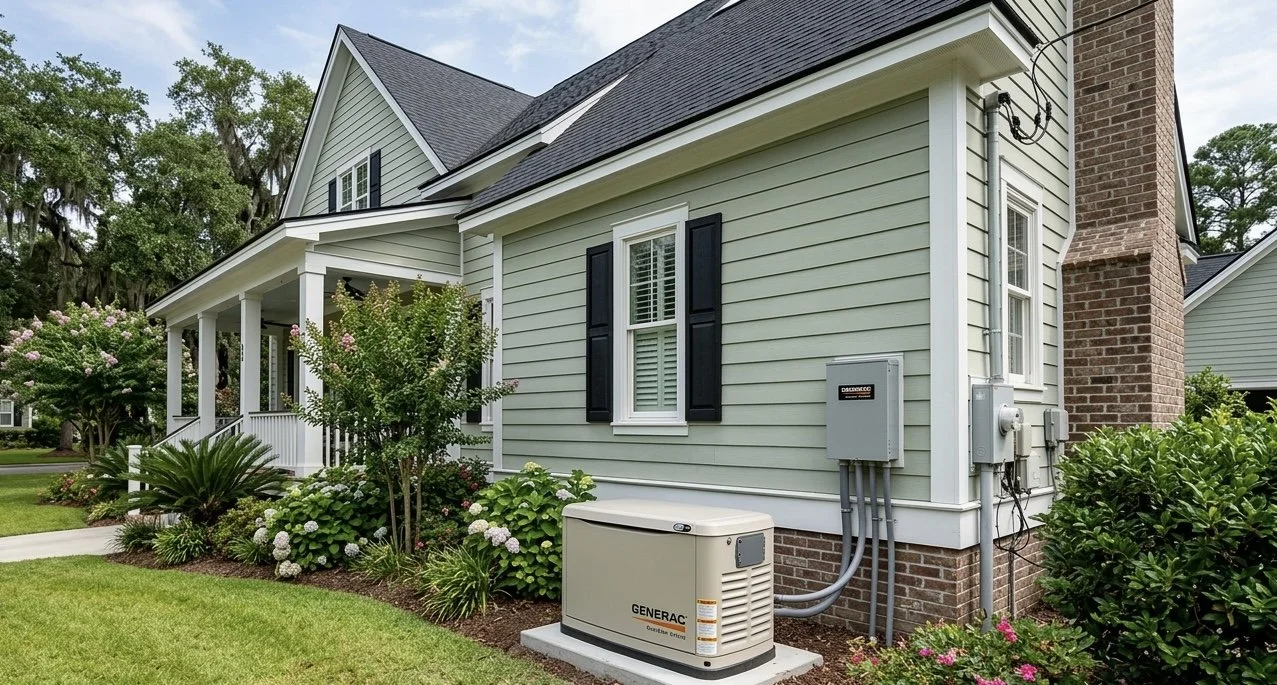
If you have ever been left without power for a few hours or even a few days, you probably wished you had a backup generator connected to your property. You are not alone. Power outages are sudden, unexpected, and tend to happen at the worst possible moment. Seasonal storms, aging electrical infrastructure, electrical system failures, falling tree branches, and winter weather are all common reasons that power grids in Greenville fail, leaving your home or business without electricity.
This guide walks Greenville homeowners and business owners through everything to know about backup generator installation, from the types of generators typically installed and the costs involved, to the legal requirements, when a licensed electrician is needed, and how the installation process works from start to finish. The goal of this article is: to answer your most common questions and make sure you feel fully prepared before, during, and after your generator installation.
Why Backup Generators Are Essential in Greenville
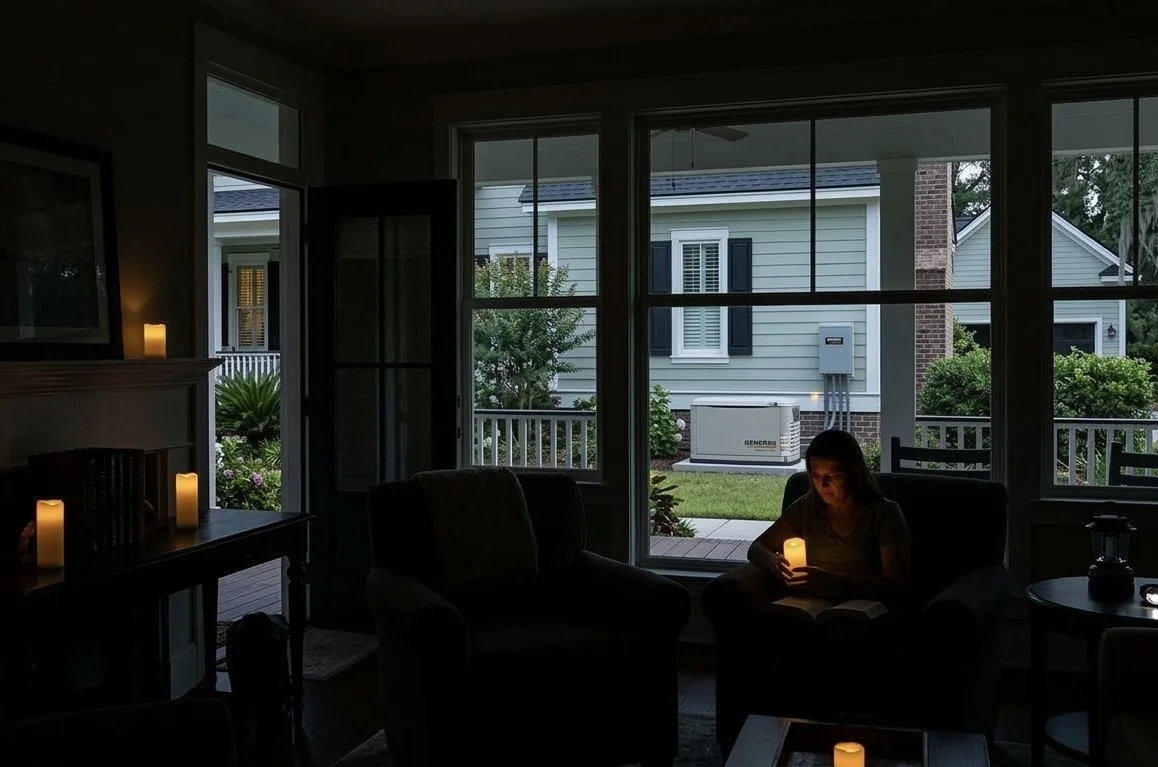
Power Outages in Greenville Are More Common Than You Think
Power outages in Greenville County are not uncommon. The majority of outages occur in November, December, and January, when storm activity and winter weather are most active. Some outages affect well over 2,000 customers at a time. In 2025 alone, Greenville experienced two major outages within just three days. One took power from over 1,000 customers and another knocked out electricity for more than 2,000 customers. Peak outages in Greenville can leave over 2,500 homes and businesses without reliable power at the same time.
In 2024, when Hurricane Helene moved through the Carolinas, approximately 639,000 customers across South Carolina lost power. That included roughly 443,000 outages in the Upstate region, which includes Greenville. Events like this are a strong reminder of just how vulnerable our local power grid can be during severe weather.
Thousands of homes and businesses in Greenville County experience power outages each year. During smaller events, several hundred to a few thousand customers may lose power. During severe storms, tens of thousands can go without electricity. That kind of disruption has real consequences for daily life and business operations alike.
What Power Outages Cost Homeowners
According to the United States Census Bureau, about 33.9 million U.S. households, roughly one in four homes, experience at least one power outage each year. About 70 percent of those households, or around 23.6 million homes, report outages lasting six hours or longer. That kind of disruption affects cooking, heating, cooling, and working from home. In some cases, outages can stretch two or more days.
One of the biggest concerns during an outage is food spoilage. Roughly 4.9 million homes in the United States reported losing food due to power outages in a single year. That is thousands of families losing hundreds of dollars worth of groceries. In longer outages, households can be left with nothing usable in their refrigerators or freezers.
There is also the risk of mold growth. When HVAC systems go offline, moisture accumulates inside the home, raising humidity levels and creating conditions that promote mold. Mold can begin forming in as little as 24 hours when a home is left without a functioning HVAC system. A backup generator keeps essential systems running, protecting your home from the kind of damage that can be far more expensive to fix than the cost of the generator itself.
Backup generators protect homes by keeping essential systems such as refrigerators, HVAC equipment, lighting, and internet devices running during power outages. A properly installed generator allows families to maintain comfort and safety during unexpected disruptions and continue daily activities without major interruption. Homeowners in Greenville often invest in standby generator installation to ensure their homes remain functional even during extended outages.
What Power Outages Cost Businesses
Power outages are a serious challenge for businesses across the United States. About 74 percent of companies experienced at least one outage in 2025 alone. Roughly 25 percent of businesses reported losing revenue because of those power interruptions. Numbers like these make clear why commercial backup generator installation has become a priority for many business owners.
Businesses in Greenville benefit from backup power because restaurants, retail stores, offices, and medical facilities can continue operating with minimal interruption. This reduces downtime and prevents lost revenue. Restaurants and grocery stores depend especially on reliable electricity because their products require continuous refrigeration and temperature control. A commercial backup generator is not simply an added expense. It is an important layer of protection that keeps operations running when the power grid fails.
Backup generators also protect sensitive electronics and connected systems from damage or data loss caused by sudden power failures. Modern homes and businesses rely heavily on computers, smart devices, and digital equipment that can be damaged or disrupted by unexpected electrical interruptions. This is why many property owners invest in whole home generator installation in Greenville or commercial backup generator installation to maintain reliable power and avoid costly downtime.
Legal Requirements for Generator Installation in Greenville
Generator Installation Permits Required in Greenville County
If you are thinking about adding a generator to your home or business, you need to be aware of the legal requirements in Greenville and the state of South Carolina. Any installation that connects to a property's electrical system requires a permit before work begins. Greenville County law explicitly states that any installation or modification of electrical, gas, mechanical, or plumbing systems requires a permit. An application must be submitted to the building official and approved before any work starts.
This regulation applies to whole home standby generators, commercial backup generator systems, electrical transfer switch installations, and all permanent generator installations. If you are planning a generator installation in Greenville, expect to submit an application to the Greenville County Building Safety Department. That department will review your application, schedule an inspection, and confirm that the installation follows local guidelines and safety standards.
Do not worry too much about navigating this process alone. In most cases, the licensed electrical contractor you hire will fill out the permit application alongside you and submit it to the local office. It is one of the services a qualified generator installer in Greenville handles as part of the overall project.
What Happens If You Skip the Installation Permit
Skipping the permit process can have serious consequences. You may face penalties, additional fees, or insurance claim denial. Yes, an insurance company can deny your claim if it finds that your generator was installed without a permit or does not follow local safety codes. Improper generator wiring, a transfer switch installed incorrectly, and a generator that backfeeds power into the electrical panel are all common issues that can result in hazard situations or put your property at serious risk.
If an insurance company finds that your backup generator was installed without approval from the Greenville County Building Safety Department and does not meet local safety standards, the insurance may argue negligence or non-compliant construction. That gives them grounds to deny your insurance claim. As a local electrical contractor that has served Greenville County for years, we’ve met homeowners who had their insurance claims denied because installations were done without permits, by unlicensed electrical contractors, or in ways that presented hazard. Do not take this risk. Either apply for a permit yourself or seek professional help from a local electrician.
Codes & Standards That Apply to Generator Installations in Greenville
Greenville County adopts the South Carolina Building Code, which closely follows the International Building Code and other national construction standards. Any generator installation in Greenville must comply with the following key codes and standards:
South Carolina Building Code
International Residential Code (IRC)
International Building Code (IBC)
National Electrical Code (NEC)
National Fire Protection Association (NFPA) standards
These codes dictate exactly how the generator must be wired, grounded, connected to your electrical system, and operated. Before your generator can be used, it must pass a county inspection. A Greenville County inspector will verify that your generator follows electrical safety codes, uses correct grounding and wiring, has proper clearance, and includes a correctly installed transfer switch.
This is exactly why hiring a licensed electrical contractor in Greenville makes sense. Instead of trying to figure out all these codes yourself and navigate the permit application process alone, a qualified Greenville electrician already knows how to obtain the permits, meet code compliance requirements, safely install the generator, and pass the post-installation inspection that follows.
Can Homeowners Install Their Own Generator in Greenville?
Yes, homeowners in Greenville may install their own generator if they have an approved permit from the Greenville County Building Safety Department and are the owners of the property. However, commercial properties are a different matter. Greenville County explicitly requires licensed electrical contractors to perform generator installations on commercial properties and to submit installation plans for a review to county office. This means offices, small businesses, retail stores, restaurants, warehouses, industrial facilities, and other commercial properties must hire a licensed electrical contractor. Commercial generator projects also typically require engineering plans and detailed site documentation.
Types of Backup Generators Installed in Greenville
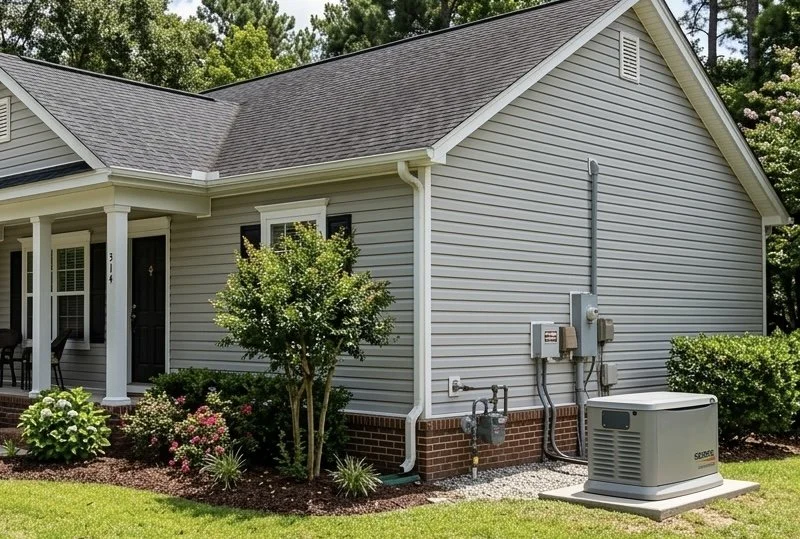
Residential Generator Options for Greenville Homeowners
The majority of residential and commercial properties in Greenville install permanent standby generators that turn on automatically when power goes out. This type of generator connects directly to the property's electrical panel through a transfer switch, restoring electricity within seconds of an outage. That speed is one of the main reasons standby generators are the most popular choice for both homes and businesses.
Residential generators typically range from 7 kW to 26 kW. Depending on the size and capacity, a residential generator can power essential electrical systems or the entire house. Most homeowners in Greenville prefer whole home standby generators that run on natural gas or propane and connect directly to the electrical panel. These generators are capable of powering most or all essential appliances, including HVAC systems, refrigerators, and lighting.
Some homeowners who have limited exterior space or a tighter budget prefer circuit generators. These are smaller units that power only the essential circuits, covering lighting, refrigerators, and HVAC systems without powering the entire home. Both options are available through a qualified generator installer in Greenville, and the right choice depends on your property, power needs, and budget.
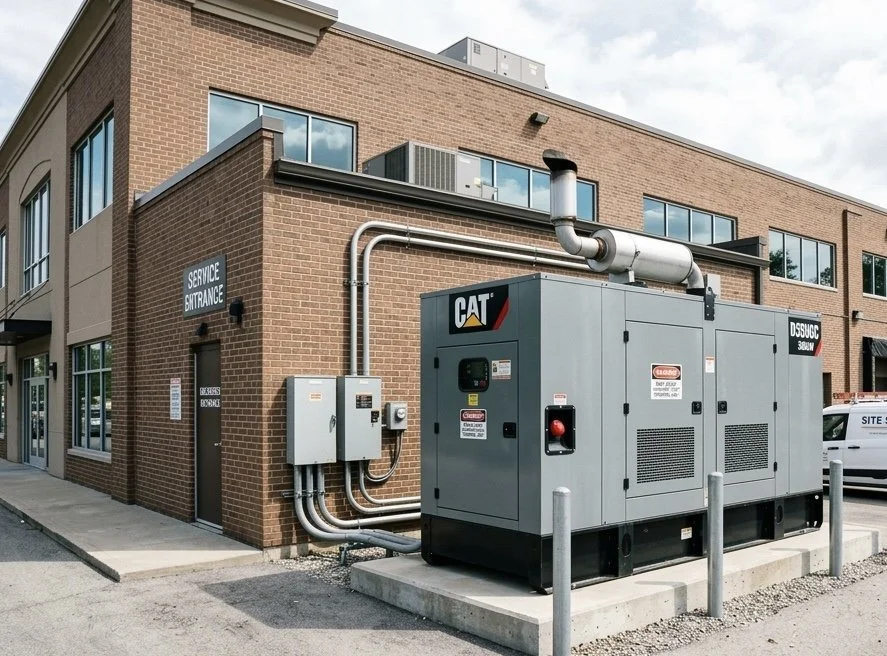
Commercial Generator Options for Greenville Businesses
Commercial generator systems are built to handle much larger loads and power demands. Their capacity typically starts at 25 kW and scales up to hundreds of kilowatts, depending on the size of the building and its electrical requirements. Unlike residential generators, commercial generators are designed for heavy-duty, long-term operation. They are built to run for days, not just hours, and to support higher electrical loads while maintaining efficiency.
Large standby generators support full building operations in offices, retail stores, manufacturing facilities, and apartment complexes. Diesel commercial generators are commonly used because they deliver strong power output and efficient performance for large electrical systems. Some commercial properties also install industrial natural gas generators connected directly to utility gas lines, allowing them to run for extended periods during outages without refueling.
The type of generator your property needs depends on several factors, including building size, power demand, fuel availability, budget, and your existing electrical system. Homes in Greenville typically choose natural gas or propane generators, while commercial properties often prefer larger diesel or natural gas units designed for extended operation.
How to Choose the Right Generator for Your Property
Key Factors to Consider Before Buying a Generator
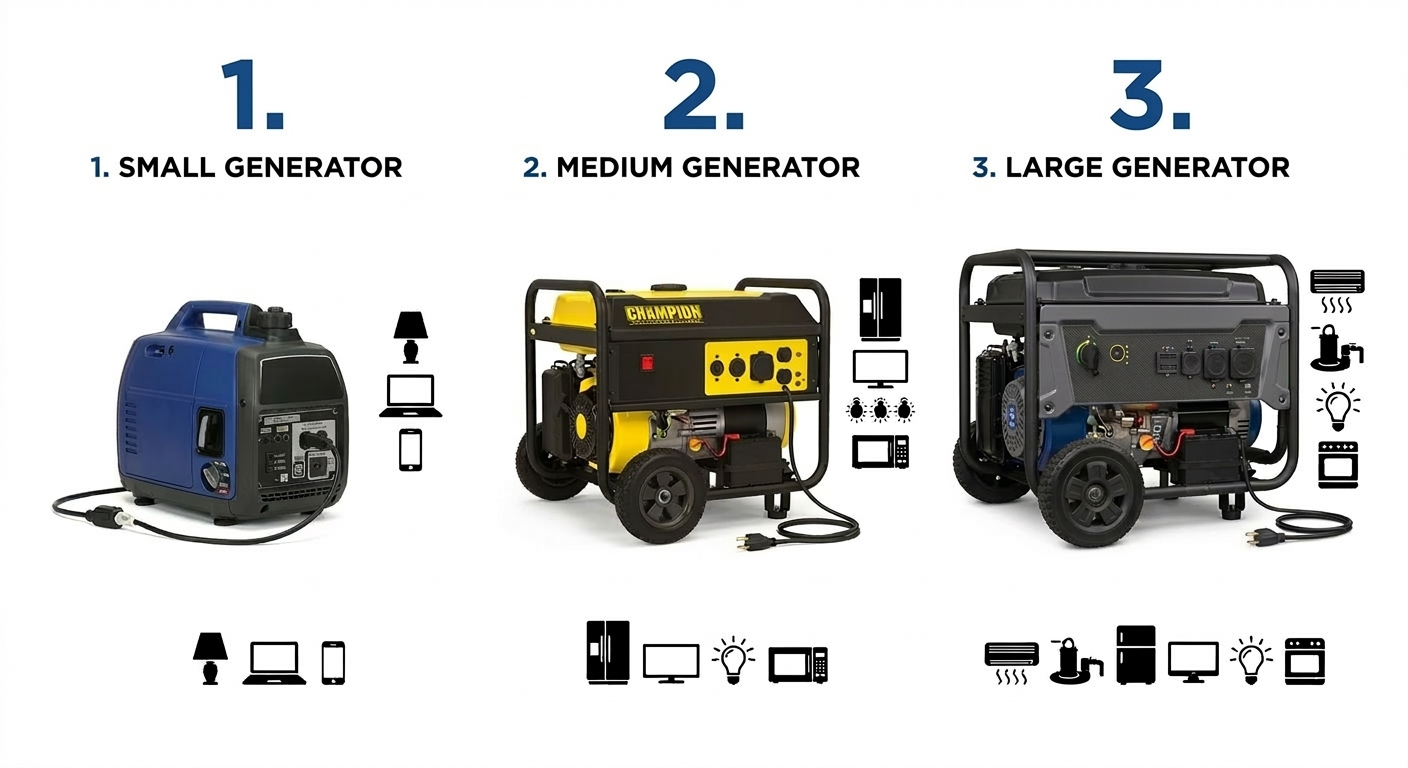
Choosing the right generator for your property requires thinking through several important factors before making a purchase. Start with power requirements. You need to determine the generator capacity that your home or business actually requires. Larger homes and businesses will have higher power demands and will need a more powerful unit to keep operations running during an outage.
Next, identify the best fuel type for your generator. Most homeowners in Greenville choose between natural gas and propane. Commercial properties often lean toward diesel or natural gas depending on their load requirements and access to fuel lines. Consider installing an automatic transfer switch as well. The transfer switch ensures power moves safely from the utility grid to the generator the moment an outage is detected. It also prevents electricity from flowing back into the power lines, protecting your property and the grid at the same time.
Think about placement. Determine where your generator will sit outside your property. The location needs proper ventilation, grounding, and protection from the elements to ensure efficient and safe operation. Budget is also a factor. Higher capacity generators cost more, but they are more durable and capable of running not just for hours but for days. The goal is to find the generator that meets your needs while fitting your budget.
How to Calculate the Generator Capacity You Need
If you are a Greenville homeowner and you are not sure what generator capacity your property needs, here is a simple guide to help you figure it out. The process starts with estimating the total electrical load of the appliances and systems that need to stay on during an outage.
Start by listing the appliances and equipment that must be powered during a blackout. Focus on the essentials first:
Refrigerator or freezer
Air conditioning or heating system
Lighting throughout the home
Kitchen appliances such as a microwave or stove
Internet router and modem
Each of these appliances has a specific wattage requirement. Look at the label on each device or check the owner's manual to find how many watts each one needs to run. Once you have that list, add up the total wattage.
One important detail to account for is starting power demand. Many appliances require extra electricity when they first start up. This is called starting watts or surge watts. Equipment with motors, such as air conditioners, refrigerators, and pumps, can require two to three times more power during startup than during normal operation. Always add a buffer to your total wattage estimate to account for these surge demands.
As an example, if a refrigerator requires 600 watts, an air conditioning unit requires 4,500 watts, and lighting requires 500 watts, the total comes to 5,600 watts. To safely power these systems including startup surges, you would need a generator with a capacity of at least 6 to 7 kW. As a general guideline, a generator in the 7 to 12 kW range can power the essential systems of a typical home, while generators between 14 and 20 kW can power medium-sized homes with several appliances running at the same time.
If you decide to hire an electrical contractor to install your generator, the electrician will conduct a thorough inspection of your property to determine your actual power demand, the right placement for the unit, and the right generator capacity to support your property efficiently. This is one of the biggest reasons homeowners and business owners choose to hire an electrical contractor rather than trying to figure everything out on their own.
The Role of a Licensed Electrician in Generator Installation
How Hiring a Licensed Electrician Makes a Difference
A licensed electrical contractor plays a critical role in the installation of a backup generator for both homes and businesses. A qualified Greenville electrician makes sure your backup generator is not just connected to your electrical system but fully integrated into it. A standby generator must work with your property's electrical panel. A transfer switch needs to be installed correctly. Proper grounding has to be prepared. All of this must be done while meeting local Greenville codes and regulations.
Improper installation does not just leave you without power the next time an outage hits. It also creates serious hazards for your property, your electrical system, and everyone inside. The risks include electrical fires and dangerous backfeeding into the utility grid. These are not minor concerns. They can cause significant property damage and put lives at risk.
What an Electrician Does During a Generator Installation
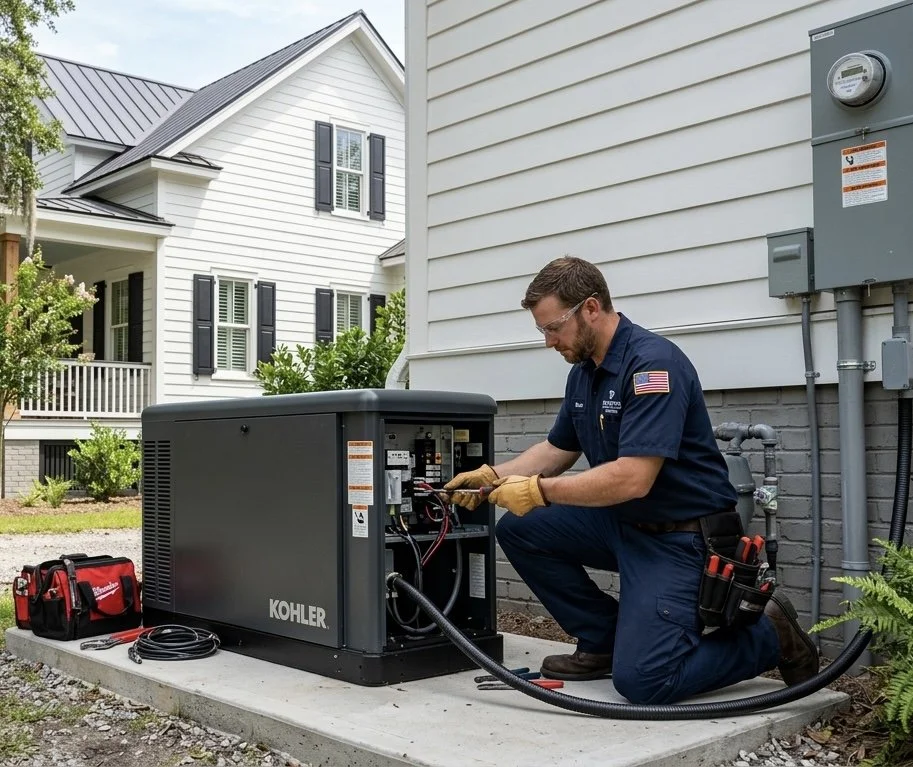
A licensed electrician arrives at your property and begins with a thorough evaluation of your electrical system, including your main electrical panel. From there, the electrician determines the electrical load your property requires, identifies the ideal generator capacity, and confirms that the unit will physically fit in the designated outdoor space.
One component that many homeowners overlook is the automatic transfer switch. This is one of the most critical parts of any backup generator system. The automatic transfer switch detects a power outage and instantly disconnects the building from the utility grid, then switches the electrical supply to the generator. It also prevents electricity from flowing back into the power lines, protecting both your property and the public utility infrastructure. Your electrician handles the installation and testing of this transfer switch as part of the overall generator installation.
During generator installation in Greenville, the electrician also handles all electrical wiring between the generator and the main service panel. This includes running electrical conduit, connecting circuits, installing proper grounding, and making sure all electrical connections meet the standards of the National Electrical Code. The electrician will also help you avoid costly mistakes by recommending generator brands and models they have used and trust, often from suppliers they already work with, which can mean better pricing and faster delivery.
If your property requires a concrete mounting pad or a grounded concrete slab for the generator to sit on, an experienced electrical contractor will coordinate that as well. They typically work with concrete contractors and landscapers they already know and trust, making the process smoother for you.
Testing & Final Inspection
After installation, the electrician tests the entire system to confirm it operates correctly. This includes simulating a power outage, verifying that the generator starts automatically, and confirming that the transfer switch moves power from the utility to the generator without interruption. Thorough testing ensures the system is prepared to pass the county inspection that follows every permitted generator installation in Greenville.
Hiring an electrical contractor for your generator installation is about more than just getting the job done. It is about having confidence that the generator will perform when you need it most, that your property is safe, and that all local regulations have been met.
If you would like to learn more about how to select and hire the right electrical contractor for your next project, check out article "8 Essential Questions to Ask Your Greenville Electrical Contractor" which covers the top eight questions you should ask before making your decision.
How the Generator Installation Process Works
Understanding what to expect during a generator installation can make the whole process feel much more manageable. Here is what typically happens from the first call to the final inspection.
-
The process begins with a site evaluation. An electrician visits your property, inspects your electrical system, determines the correct generator size, and identifies the best installation location. Based on those findings, the electrician prepares a detailed quote that includes the cost of the generator unit, the labor required, and any additional work such as a concrete pad installation or fuel line connection. This is also a good time to ask about the expected project timeline.
-
Before any physical work begins, your electrical contractor submits a permit application to the Greenville County Building Safety Department on your behalf. This step is required by law for all generator installations that connect to a property's electrical system. A reputable generator installation company in Greenville handles this step for you, removing the paperwork burden and ensuring the application meets all local requirements.
-
If your installation requires a concrete mounting pad or specific grounding preparation, this work is completed before the generator arrives. Your electrical contractor will coordinate with a trusted concrete contractor if needed, making the process as seamless as possible.
-
Once permits are approved and the site is prepared, the generator unit, automatic transfer switch, and all electrical wiring are installed. The fuel supply, natural gas or propane, is connected to the generator at this stage as well. Every connection is made according to the applicable codes, including the National Electrical Code and South Carolina Building Code.
-
With installation complete, the electrician simulates a power outage to confirm the generator starts automatically and the transfer switch engages correctly. The system is tested thoroughly to verify safe and reliable operation before the county inspection takes place.
-
A Greenville County inspector visits the property to verify that the installation meets all local safety codes. A generator that has been installed by a licensed and experienced generator installer in Greenville will pass this inspection without issue. Once the inspector signs off, your backup generator is fully legal, compliant, and ready to protect your home or business.
Working with an experienced generator installation company in Greenville makes this entire process smooth and stress-free. The goal of a professional electrical contractor is to handle every step so that you can focus on what matters most to you.
Why Choose Redland Electric for Generator Installation in Greenville
Redland Electric is a go-to generator installer in Greenville for hundreds of homeowners and businesses. We install standby generators, whole home generators, and commercial generators for homeowners and businesses throughout Greenville and Spartanburg counties, helping properties stay powered throughout even the worst emergencies.
Local Electrical Expertise
Our electricians are locals. They live and work in Greenville County, which means our electricians are already familiar with the architecture of homes and businesses in the area. We know what permits need to be filed, what local guidelines apply, best generator placements, and how to pass the post-installation county inspections. That local knowledge makes a real difference in the quality and efficiency of every generator installation we complete.
Redland Electric brings over 25 years of combined local expertise to every project. Redland Electric electricians are licensed, insured, bonded, and professionally trained on local electrical systems. We treat every property like our own, which means we clean up after ourselves, never leave mess behind. The owner of the company, David Tkach, personally oversees each electrical project to ensure consistent quality and to make sure every installation meets client's expectations.
Transparent Pricing & Personalized Electrical Services
One thing that sets Redland Electric apart from other Greenville generator installers is our commitment to transparent pricing. We believe high-quality electrical services should be accessible to all local homes and businesses. There are no surprise fees, no hidden charges, and no last-minute additions to your invoice. We provide a detailed, broken-down quote before starting a project, so you have a full understanding of every service and every expense involved in your project.
We do not believe in a one-size-fits-all approach. Our electricians take the time to understand your specific needs, budget, property size, and project requirements before preparing a quote. Every quote we provide is customized to the actual job.
Redland Electric communicates with you throughout every stage of the project so there are never any surprises. We work with you to find a convenient date for your generator installation, keep you informed as the work progresses, notify you upon completion, and follow up to make sure you are fully satisfied with the results.
A Full-Service Generator Installation in Greenville
When you hire Redland Electric for your generator installation, our electricians arrive fully equipped to handle installations of any size. We conduct a thorough electrical inspection to determine the right generator for your property and identify the best placement. We then present a detailed quote covering parts, labor, and the generator unit itself. We handle the permit application and coordinate any site preparation needed. Once installed, we conduct thorough testing of the entire system, including the automatic transfer switch, to confirm everything operates safely and efficiently.
If you already own a generator and simply need professional installation, we handle that too. Our electricians will evaluate your existing unit, determine the best integration approach, and install it properly to meet all local codes and pass county inspection.

Team of Electricians That Cares About the Community
Redland Electric has a strong family-first culture. We know that when we take good care of our team, our team takes good care of our customers. Our electricians are committed to resolving every electrical issue thoroughly and creating a seamless experience for each client, making sure your issue is fully addressed and every installation meets the latest safety codes and regulations. Once the job is complete, our team takes the time to walk you through helpful maintenance tips, share insights, and answer any questions so you can enjoy an electrical system that is both efficient and safe for years to come. We are genuine members of the Greenville and Spartanburg communities, and we are invested in serving those communities with quality electrical work.
Redland Electric installed dozens of backup generators for homes and businesses in Greenville and Spartanburg counties. Beyond generator installations, we offer a full range of electrical services including electrical panel repairs, lighting installations, wiring, emergency electrical services and more. Our electricians serve properties beyond just Greenville, serving also: Duncan, Greer, Simpsonville, Taylors, Spartanburg, Mauldin, Five Forks, and other surrounding areas.
If you have been searching for generator installers near me, Redland Electric is the electrical company you have been looking for! Schedule an inspection with one of our licensed Greenville electricians today and take the first step toward protecting your home or business from unexpected power outages!